By Capay Hills Orchard
Buy from Capay Hills Orchard →Health & Certification Facts
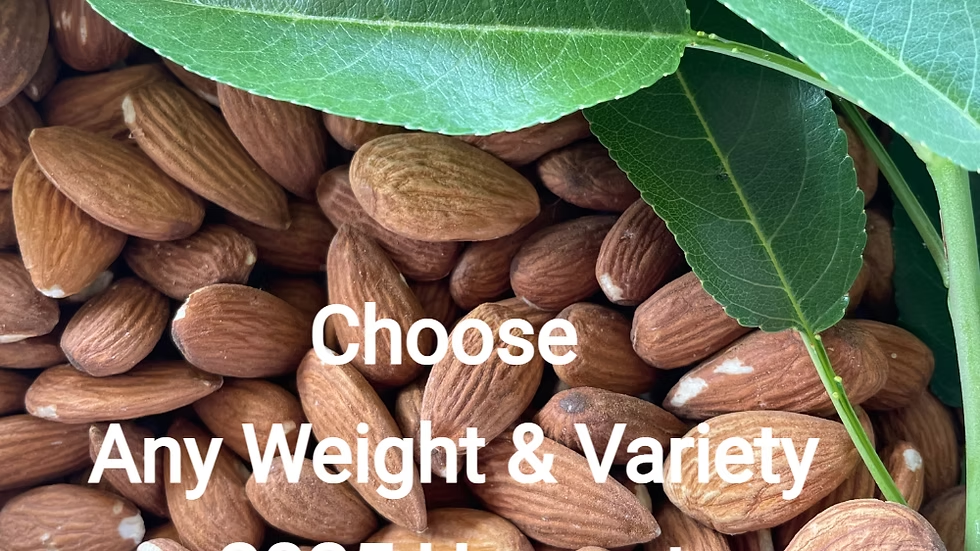
Available Varieties — Choose at Order
The Problem Solved at the Source
The 2007 USDA pasteurization mandate exists because California almonds are harvested by shaking trees and sweeping the nuts off the ground — where they contact soil pathogens including salmonella. Capay Hills Orchard solved this problem the right way: by harvesting onto tarps. Their hydro-mechanical shaker is built into a catch frame tarp system that catches almonds directly off the tree, never touching the ground. The contamination pathway that made pasteurization seem necessary simply does not exist on this farm. That means no PPO fumigation — the EPA-classified probable carcinogen used on over 68% of US almonds. No steam treatment. No heat. The nuts go from tree to tarp to your door, untreated, alive, and whole.
Our Evaluation
Every other truly raw California almond on the Gold Label list earns that designation through a legal exemption — the USDA's small farm roadside stand rule, which permits direct-to-consumer sales of untreated almonds regardless of the mandate. Capay Hills earns it through something more fundamental: they addressed the contamination problem at its root cause. Their off-ground tarp harvest system is the reason their almonds can be sold raw. It is not a workaround. It is the correct solution to the problem the pasteurization mandate was designed to solve.
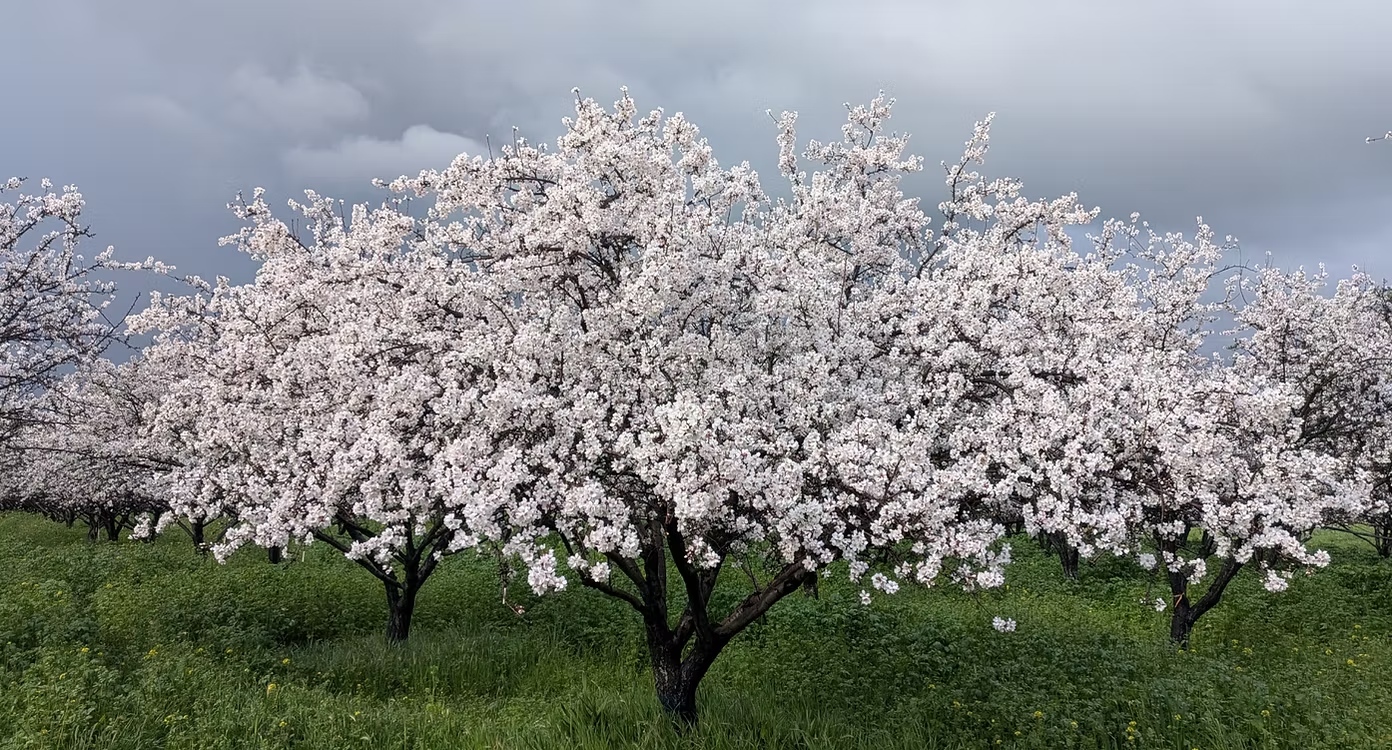
Brian and Gretchen Paddock started Capay Hills Orchard in the beautiful Capay Valley of central California. All eight members of their family farm the 1,400 trees together. Their home is situated in the middle of the orchard — they drink the same water as their trees. That is not a farming philosophy statement. It is a practical reality that shapes every decision they make about what goes into the soil and water around their property. They do not spray herbicides. They do not use synthetic pesticides. They use flaming — burning weeds with a torch — to clear the strips between tree rows that tractors cannot mow, because they are not willing to strip-spray even when it would be significantly faster and cheaper.
The certification reflects this. USDA Organic is the baseline. The Real Organic Project adds a layer that the USDA label alone does not: it verifies that actual farming practices match what the organic label implies. Real Organic Project certification was created in response to growing concerns that USDA Organic had become diluted by industrial operations using hydroponic growing and other practices that undermine the spirit of the standard. A Real Organic Project farm is doing it the way organic farming was always meant to be done.
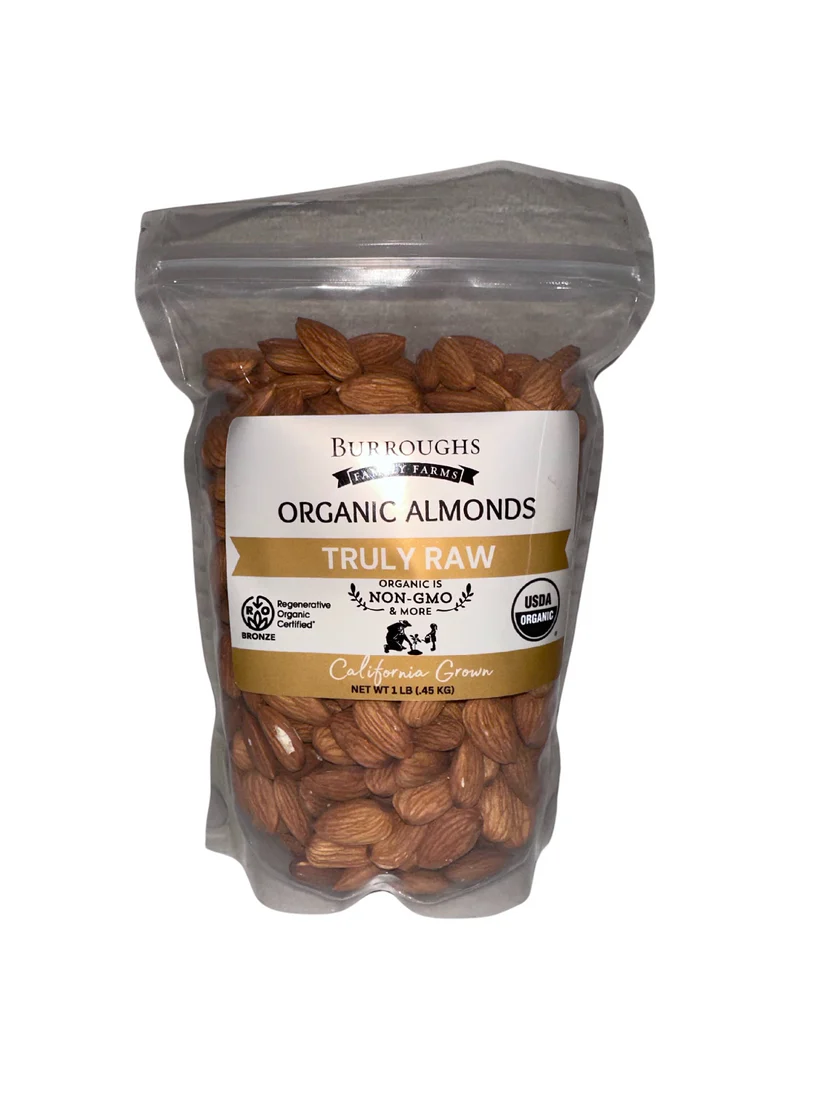
The variety choice available through Capay Hills is a meaningful benefit not offered by the other Gold Label almond farms. Customers can select Nonpareil for mild versatility, Monterey for a smoother profile, Fritz for fuller flavor, or a blend — and every variety comes from the same certified organic, tarp-harvested, truly raw orchard. This is the Gold Label almond for customers who want California-grown, want to understand exactly how the food safety question was resolved, and want to be able to choose the variety that suits how they eat.
Per Capay Hills Orchard
Transparency Flags — What Has Not Been Independently Verified
These gaps do not diminish what Capay Hills represents. The off-ground harvest innovation, USDA Organic + Real Organic Project certifications, and dedicated allergen-free equipment make this the most food-safety-forward truly raw California almond available.
Bonham Gold Label Evaluation
Contaminant Status
A transparent breakdown of every contaminant category and what is known — or not known — about this specific product.
Off-ground tarp harvest. USDA Organic + Real Organic Project certified. Multiple California varieties to choose from. Direct from the Paddock family farm in Capay Valley.
Buy from Capay Hills Orchard →