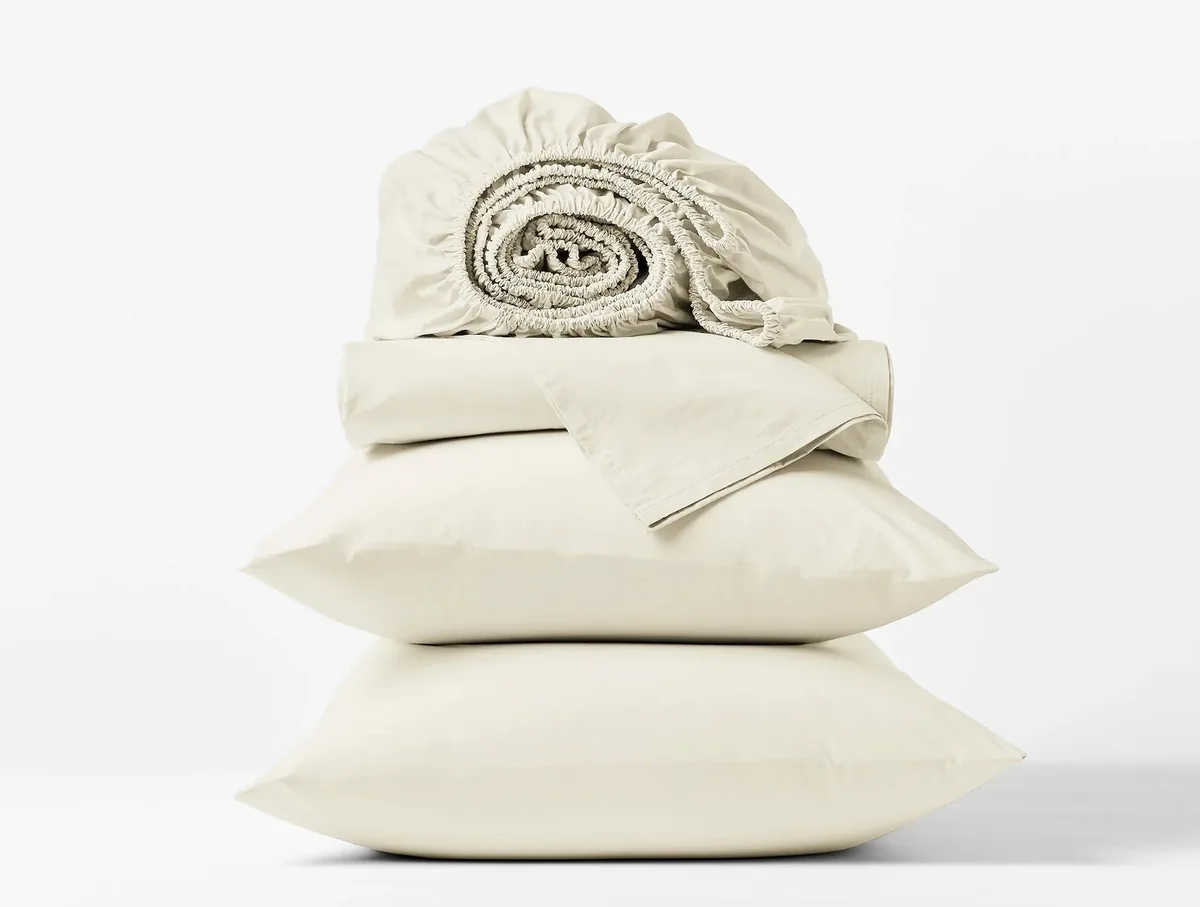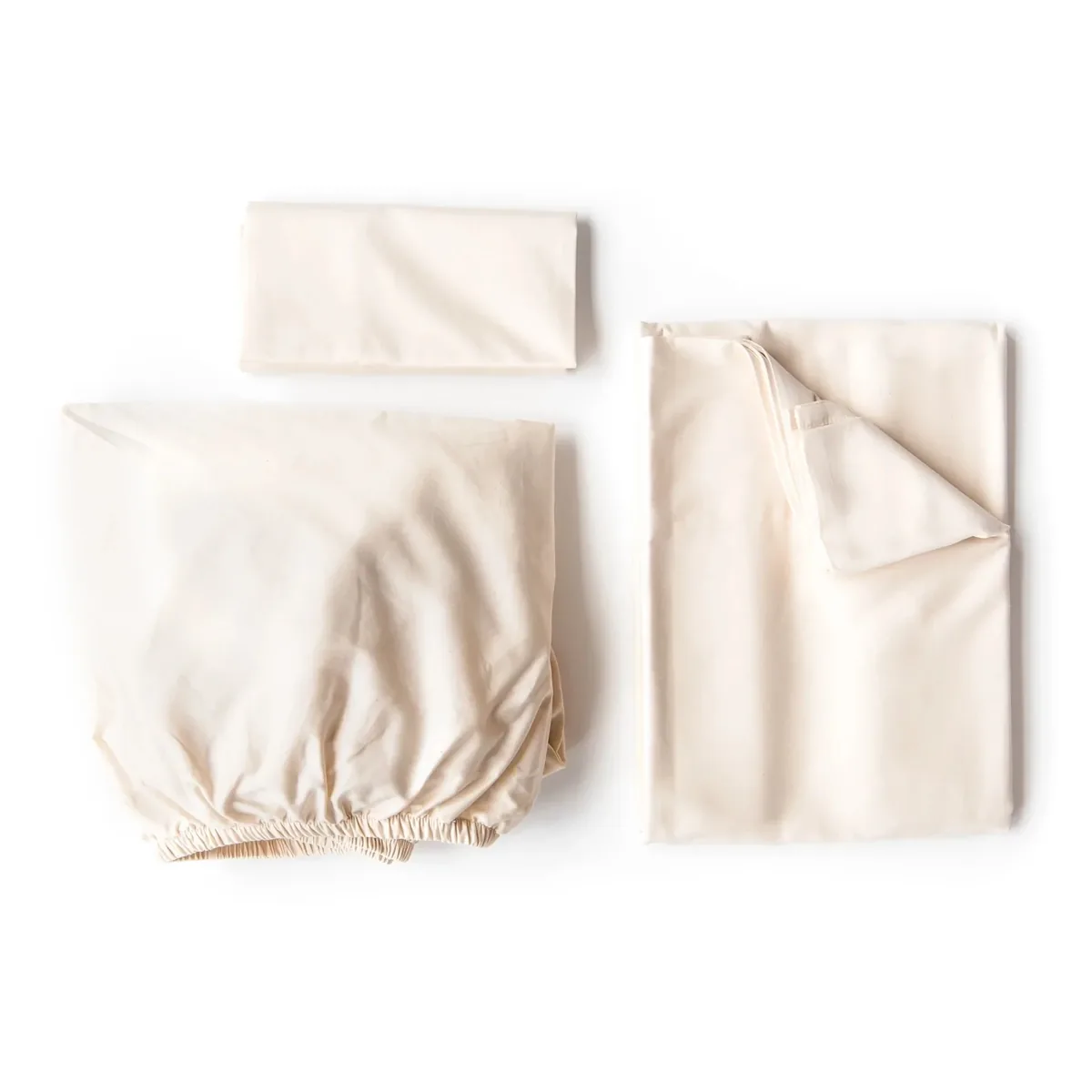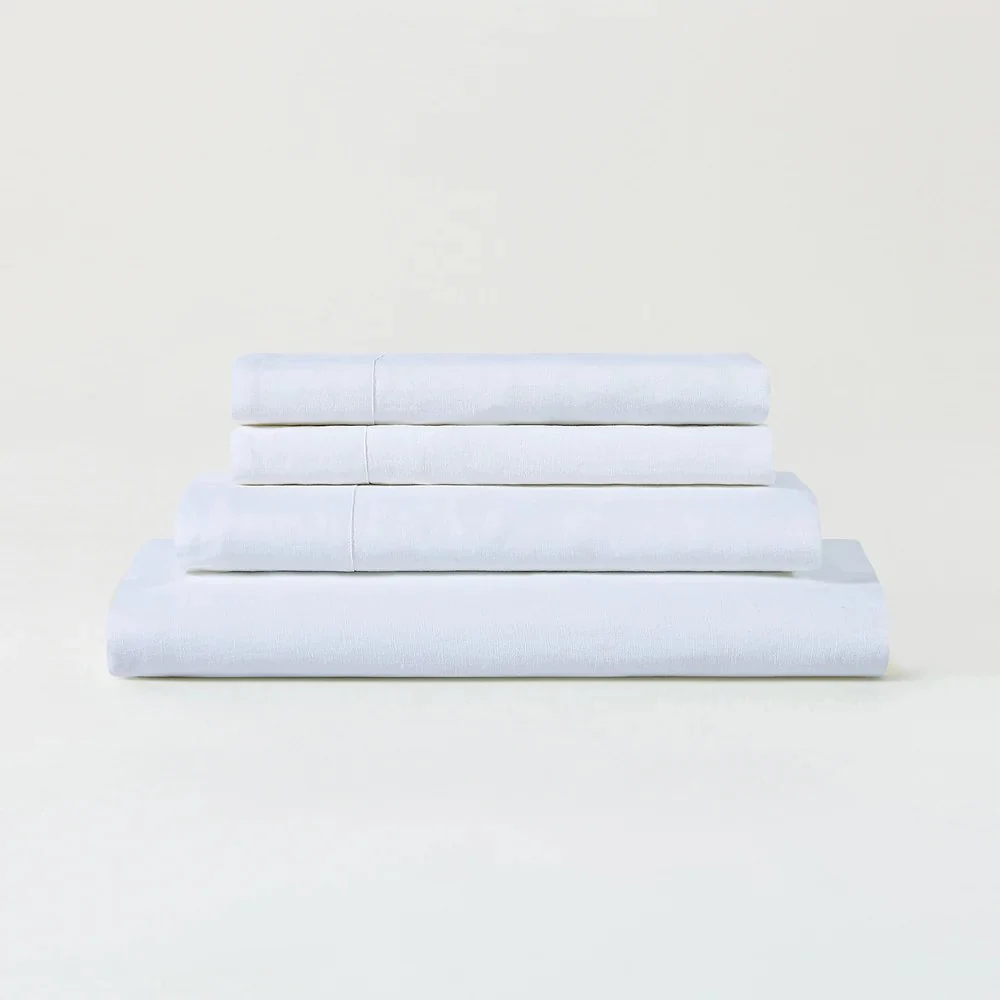
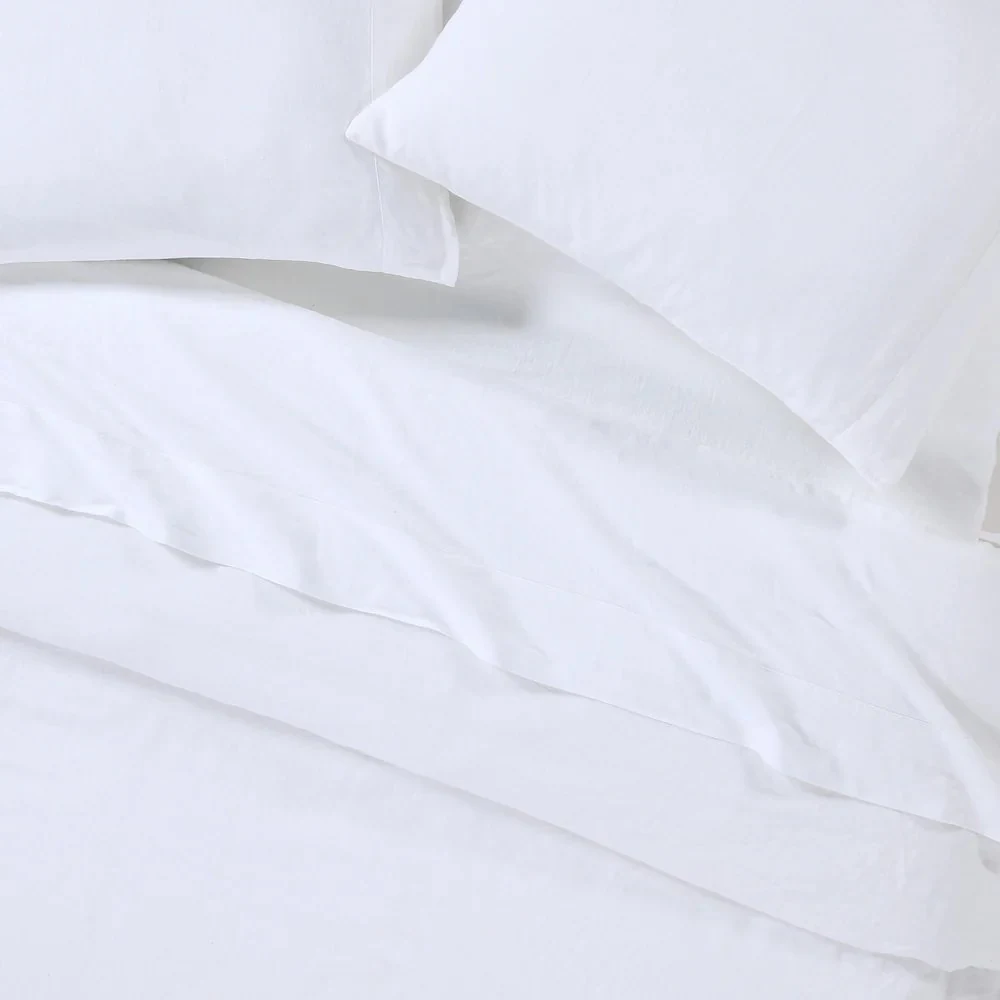
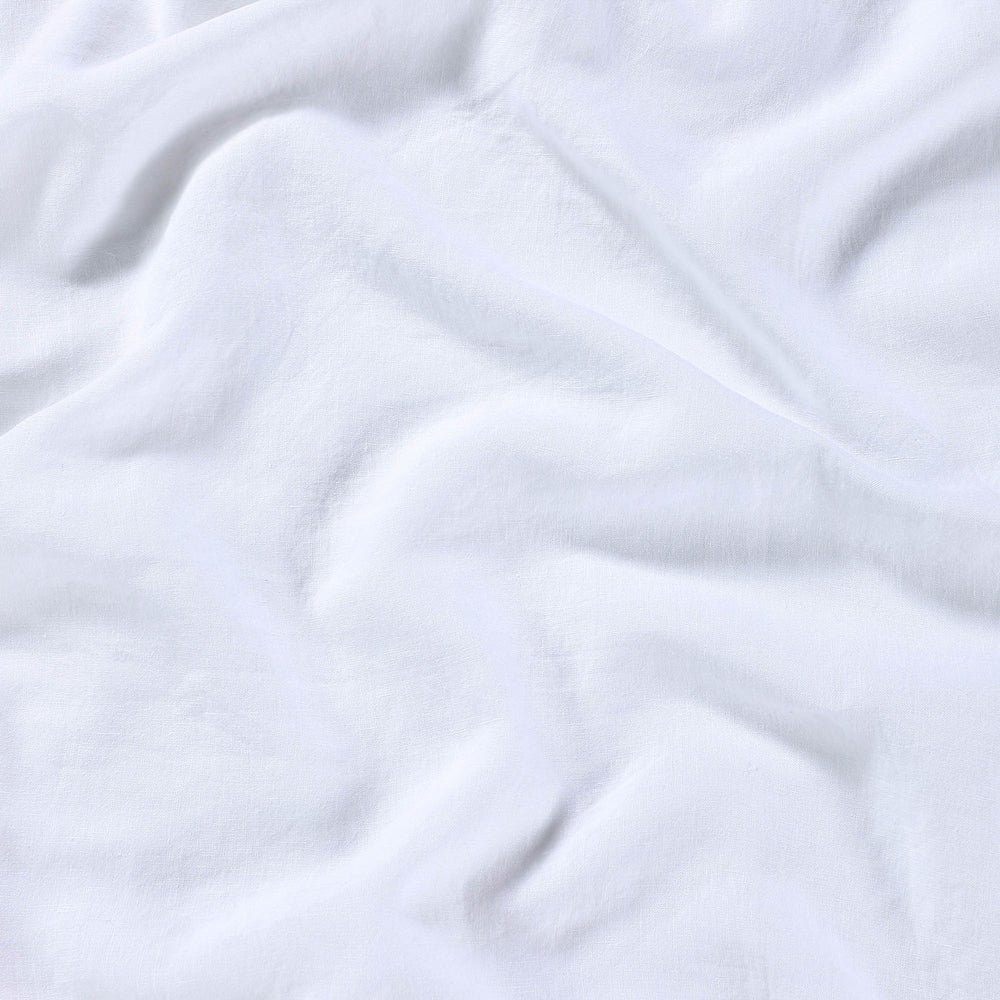
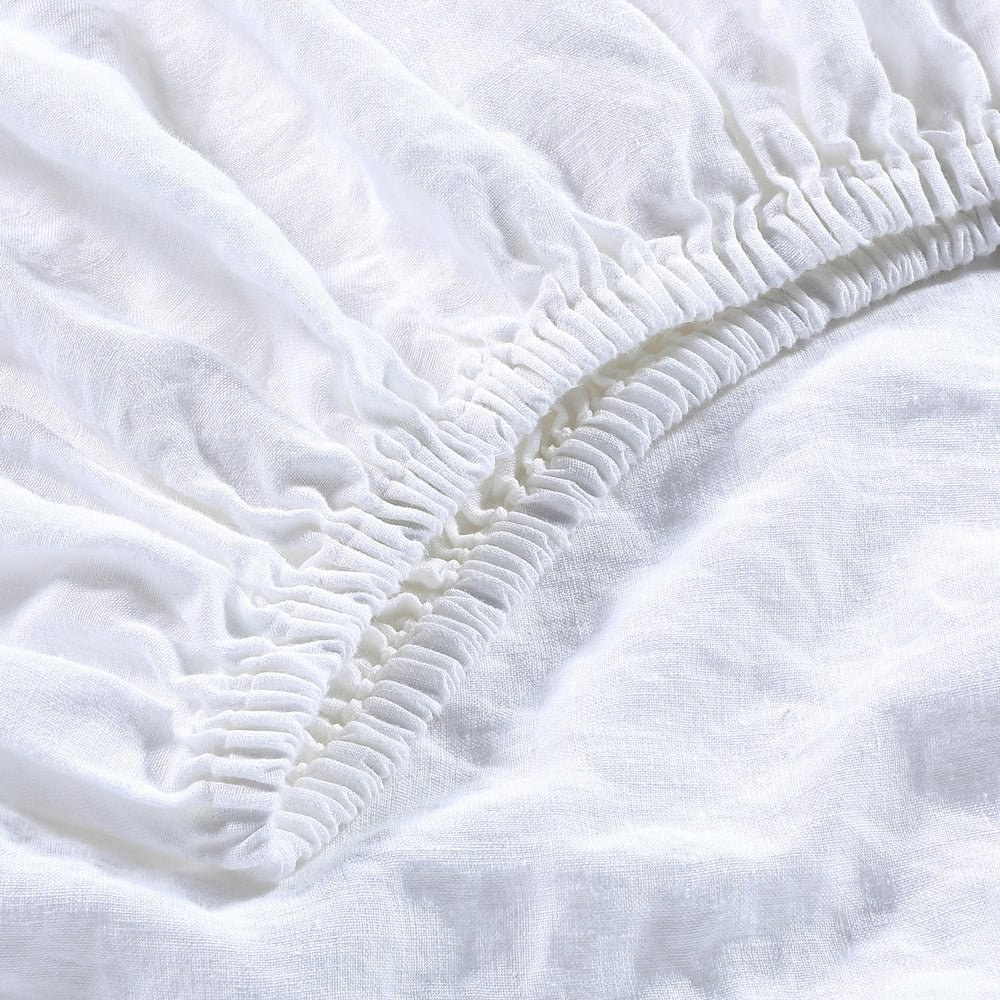
Undyed Organic Linen Sheets
Sijo
Buy from Sijo →Why It Earned Gold Label
- GOTS-certified organic French flax (license GOTS-24366)
- Natural colorway — the raw, undyed shade of the flax fiber
- Free of dyes and bleaches; softened only by mechanical stonewashing
- Flax is structurally non-GMO — no commercial GMO flax exists
- OEKO-TEX Standard 100 — finished fabric tested for harmful substances
- Grown in Normandy, France, a region famed for the world's finest flax
The Gold Label Sheets Collection
Six picks, one standard — undyed and dyed, across linen, percale, and sateen. Explore the rest of the collection:
Undyed PercaleUndyed Organic Percale Sheets → Undyed SateenUndyed Organic Sateen Sheets → Dyed LinenOrganic Linen Sheets → Dyed PercaleOrganic Percale Sheets → Dyed SateenPlant-Dyed Organic Sateen Sheets →The Bonham Standard
Our Evaluation
Linen has a built-in advantage in this category that no cotton can match: flax is structurally non-GMO. There is no commercial genetically modified flax anywhere in the world, so the non-GMO question isn't answered by a certificate that could lapse — it's answered by the plant itself. Flax is also naturally resistant to pests, making it one of the lowest-input fiber crops grown. For a standard built on “never sprayed, no chemicals, non-GMO,” linen starts the race ahead.
The problem is that almost no linen on the market is both certified organic and undyed. Most organic linen is dyed; most undyed linen is uncertified. Sijo's Natural colorway is the rare exception to both: the flax is grown organically in Normandy under GOTS license GOTS-24366 — an independent audit of the farming and every processing step — and the Natural colorway carries the raw, earthy shade of the flax fiber with no dye and no bleach. Softness comes from stonewashing, which is mechanical tumbling, not chemistry.
OEKO-TEX Standard 100 certification adds a second layer: the finished fabric is laboratory-tested against limits for a long list of harmful substances. That complements GOTS well — one audits how the fiber was grown and processed, the other tests what's actually in the cloth at the end.
Two honest notes. First, Sijo's own marketing describes its linen line broadly as “undyed” while selling many dyed colorways — imprecise copy we won't repeat. Our pick is the Natural colorway specifically, and we describe it in our own words. Second, while the flax is grown and spun in France, final sewing takes place in Shanghai within the GOTS-audited chain. We'd rather tell you that plainly than let “French linen” imply the whole product never left Normandy.
GOTS — Global Organic Textile Standard (GOTS-24366)
- Certifies organic flax farming in Normandy, France — no synthetic pesticides
- Audits every facility in the processing chain through to the finished textile
- Prohibits chlorine bleach, formaldehyde resins, toxic azo dyes, and PFAS
- Finished fabric is laboratory-tested against limits for harmful substances
- A certification program built on lab testing — complementary to GOTS's process audit
Transparency Note
Our pick is the Natural colorway only — Sijo sells many dyed colorways of this same sheet, and our evaluation does not extend to them. Sijo's marketing describes the line as a whole in terms we consider imprecise, so we have written our own description and are confirming the Natural colorway's dye-free status with the company directly. Final sewing occurs in Shanghai, China within the GOTS-audited supply chain. No independent laboratory report beyond the OEKO-TEX certification testing exists for this product.
How It Measures Up
Purity Profile
Naturalness & Purity 4/5
Undyed, unbleached flax in its raw natural shade, softened mechanically rather than chemically. Flax's structural non-GMO status and naturally low-input farming make it arguably the purest fiber choice in bedding. Held from a perfect score by the absence of public finished-fabric lab data beyond certification testing.
Ingredients & Additives 5/5
No dyes, no bleach, no brighteners, no chemical softeners — stonewashing is a mechanical process. Every category our standard treats as a hard disqualifier is absent.
Verification 4/5
GOTS license GOTS-24366 covers the organic farming and processing chain, and OEKO-TEX Standard 100 adds finished-fabric laboratory testing. That's two independent verification systems aimed at different stages — a genuinely strong stack for linen, where most “organic” claims carry no certification at all.
Transparency 3/5
The certification trail is real and checkable, but the brand's own marketing copy is looser than we'd like — describing a many-colorway line as “undyed” — and the Shanghai construction step isn't volunteered prominently. We've disclosed both here so you don't have to dig.
Plain English, Always
Contaminant Status
Fiber Source — Pesticides & GMO
Organic flax grown in Normandy under GOTS audit. Flax is non-GMO by nature — no commercial GMO flax exists anywhere — so this claim doesn't depend on a certificate alone.
Bleaching & Whitening
None in the Natural colorway — the fabric keeps the raw shade of the flax fiber.
Dye Chemistry
None in the Natural colorway. Other colorways of this sheet are dyed and are not part of our pick.
Chemical Finishes
Softened by mechanical stonewashing, not chemicals. GOTS processing rules prohibit formaldehyde and PFAS finishes.
Heavy Metals
Not independently tested outside the OEKO-TEX certification's testing scope. No standalone laboratory report exists.
Synthetics & Microplastics
100% flax fiber — no synthetic content, nothing to shed microplastics.
Undyed Organic Linen Sheets
GOTS-certified organic French flax in its raw, undyed natural shade — the rare linen that is both certified and untouched by dye or bleach.
Buy from Sijo →