Why We Chose It
Linen walked into this evaluation with an advantage no cotton can claim: there is no commercial genetically modified flax anywhere in the world. The non-GMO question isn't settled by a certificate that could lapse — it's settled by botany. Flax is also naturally pest-resistant, one of the lowest-input fiber crops grown. For a standard built on never-sprayed, non-GMO purity, linen starts ahead.
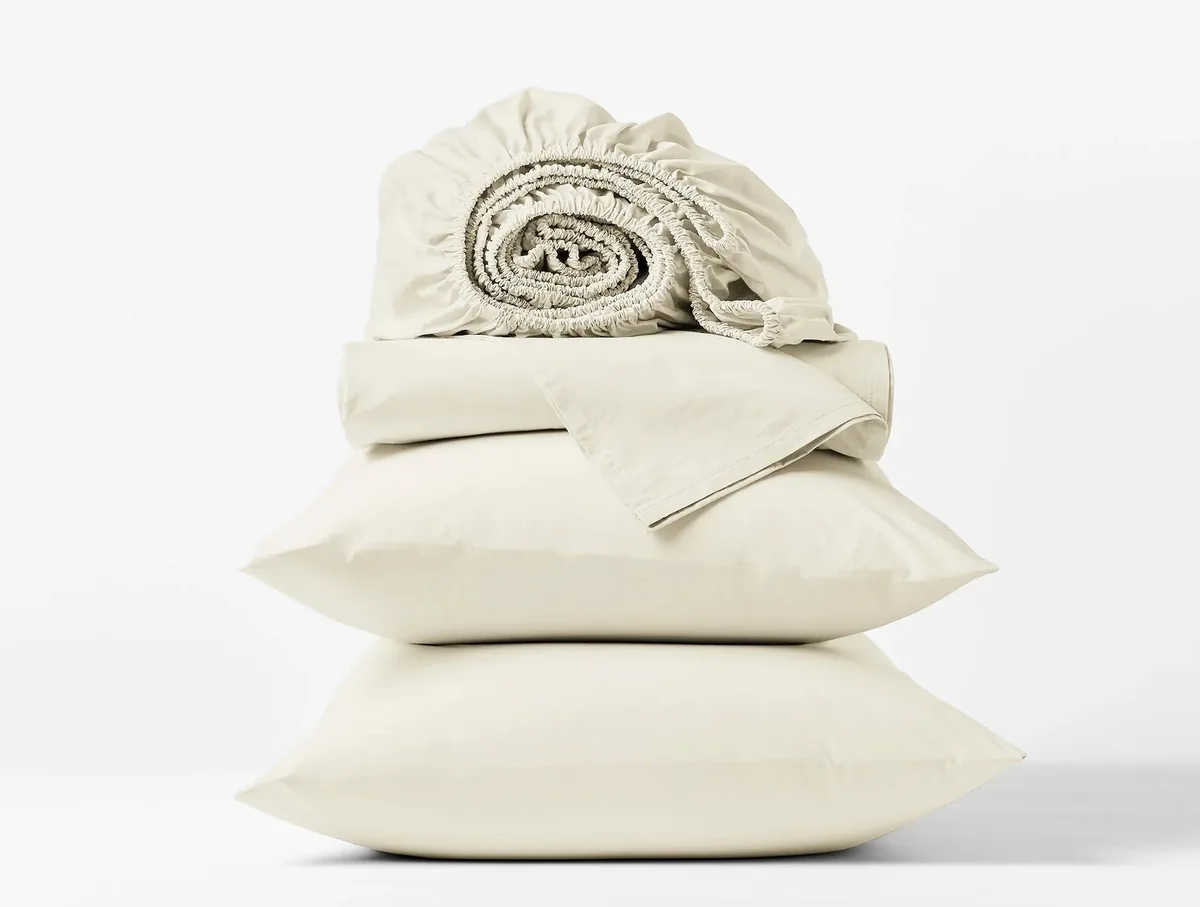
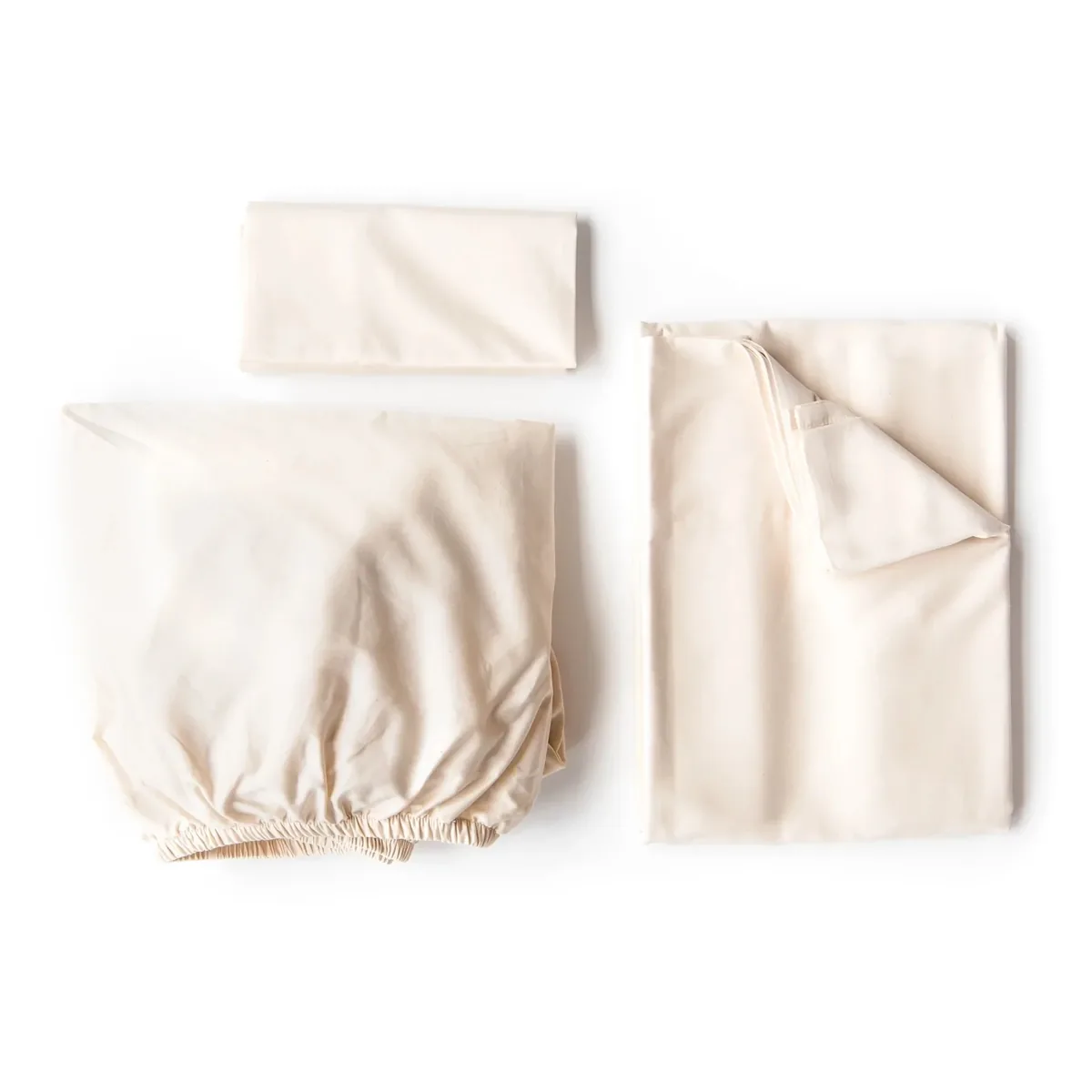
The catch is that almost no linen is both certified organic and undyed — most organic linen is dyed, and most undyed linen is uncertified. Sijo's Natural colorway is the exception that earned the Gold Label: GOTS-certified organic flax from Normandy, in the raw shade of the fiber, with no dye and no bleach, softened only by mechanical stonewashing. We disclose the gaps as plainly as the strengths: the brand's own marketing copy is looser than we'd like, final sewing happens in Shanghai within the audited chain, and no standalone lab report exists. The pick survives all three disclosures comfortably.
Who They Are
Sijo is a newer name than some on this site, a home-textiles brand built around natural fibers — and its linen program is sourced from Normandy, France, the region that grows what is widely considered the finest flax on earth. The flax is grown organically under GOTS license GOTS-24366, spun and woven within the audited chain, and finished by stonewashing: mechanical tumbling that delivers the soft, lived-in feel linen lovers want without chemical softeners.
We'll be candid about the company where it matters. Sijo describes its linen line broadly as “undyed” while selling many dyed colorways of the same sheet — marketing imprecision we won't repeat, which is why our pick and our description are specific to the Natural colorway, the raw flax shade. Good product, looser copy; we evaluated the product.
Claims & Certifications
GOTS — Global Organic Textile Standard (GOTS-24366)
The GOTS license behind this linen covers the organic farming in Normandy — no synthetic pesticides, audited annually — and every processing facility through to the finished textile, under rules that prohibit chlorine bleach, formaldehyde resins, toxic azo dyes, and PFAS. For linen this is rarer than it sounds: because flax is such a low-input crop, most growers never pursue organic certification at all, which means most “natural linen” on the market is an unverified claim. A license number you can trace is the exception, and it's a meaningful one.
OEKO-TEX Standard 100
OEKO-TEX Standard 100 adds something GOTS doesn't: the finished fabric itself is laboratory-tested against limits for a long list of harmful substances. One certification audits how the textile was made; the other tests what's actually in the cloth at the end. Together they cover both the process and the product. OEKO-TEX testing happens within a certification program rather than as a public batch report, and we present it with that precision.
Independent Research & Lab Testing
No report on this product exists from Lead Safe Mama, LLC (tamararubin.com) or Mamavation (mamavation.com), the independent consumer laboratories we cite by name elsewhere on this site, and no public certificate of analysis has been published for the finished fabric.
The verification that does exist — a traceable GOTS license on the farming and processing, plus OEKO-TEX laboratory testing of the finished fabric within its certification scope — is the strongest combination we found anywhere in linen. We are also confirming the Natural colorway's dye-free status directly with Sijo, because we'd rather have the company's specific answer on record than rely on marketing copy we've already flagged as imprecise.
The Broader Picture
Linen's industry-wide problem is different from cotton's. The fiber itself is clean — low-input farming, no GMO varieties, a crop so undemanding it improves rotation soils. The trouble arrives at the finishing stage: nearly all linen is dyed with unspecified chemistry, many are chemically softened to fake the buttery feel that honest linen only earns through washing, and “European flax” labels describe where the plant grew while saying nothing about what happened to the fabric afterward.
That's why our linen pick is defined by what was withheld. Raw flax color instead of dye. Stonewashing instead of chemical softeners. A traceable organic license instead of a vague provenance story. Linen is the most naturally pure fiber in bedding — it just needs a maker disciplined enough not to ruin that purity in the finishing room, and certification honest enough to prove it.