Why We Chose It
The Bonham Conclusion
We chose PJ Kabos for a single, unusual virtue: it proves its polyphenol numbers two different ways. The brand publishes both an HPLC and an NMR figure for its oils — a level of method transparency almost no producer offers, because it exposes the number to scrutiny instead of hiding behind one convenient measurement.
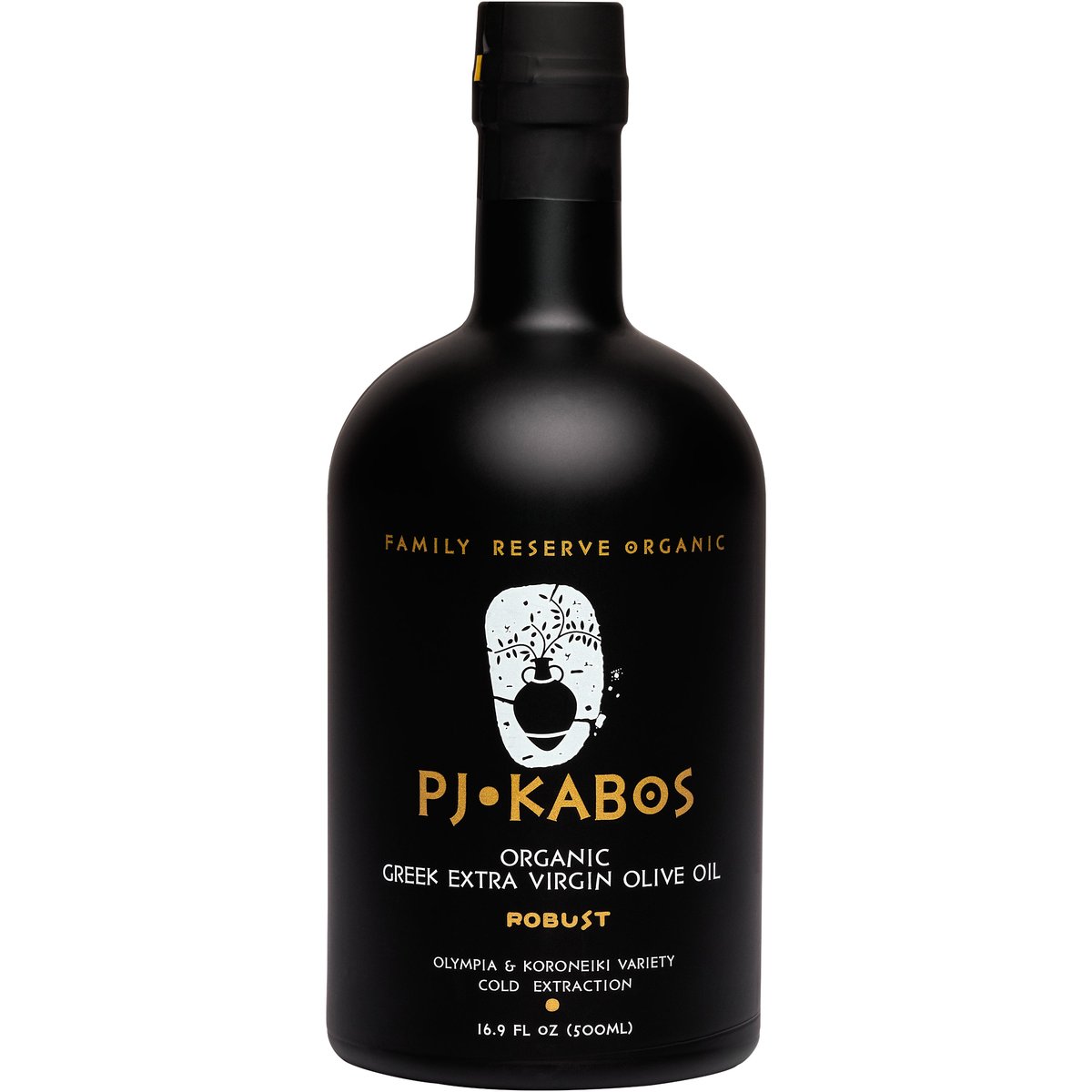
The Family Reserve Organic Robust is USDA-organic, non-GMO, Kosher-certified, and pressed from early-harvest Koroneiki and Olympia olives with ultra-low acidity under 0.3% and roughly 699 mg/kg of polyphenols.
We're clear about the limits: it is not the highest-polyphenol oil in this collection, and no independent heavy-metal panel is published. It earns its Gold Label on organic certification plus the rarest thing in this category — a number you can actually check.
Who They Are
PJ Kabos — What Makes Them Different
PJ Kabos is a family that settled near Ancient Olympia, in the Western Peloponnese, in the 1890s and has grown olives, grapes, and currants there since. Their Family Reserve Organic line is made from early-harvest Koroneiki — a variety prized for naturally high polyphenols — grown in the semi-mountainous terrain of the region.
The olives are picked early, while still yellow-green, and cold-extracted to preserve the phenolics, producing an oil with acidity well under the 0.3% mark. The Robust bottling is the high-phenolic expression of that line.
What genuinely distinguishes them is testing honesty. Where most brands cite a single polyphenol figure, PJ Kabos publishes both HPLC and NMR results for each harvest — the two accepted laboratory methods — so buyers can see that the numbers hold up under either measurement.
Claims & Certifications
What PJ Kabos Claims — And What Each One Means
Independent Research & Lab Testing
What the Numbers Show — And What Isn't Tested
PJ Kabos — dual-method polyphenols: The producer reports its Family Reserve Organic phenolic content by both HPLC and NMR — for its flagship Phenolic Shot, for example, 900+ mg/kg (HPLC) and 1,400+ mg/kg (NMR) — with the Robust in the high-phenolic range around 699 mg/kg. Figures are published at pjkabos.com.
What has not been tested: No independent heavy-metal, pesticide, or phthalate panel exists for this oil, and Lead Safe Mama and Mamavation have not tested it. USDA organic certification governs farm inputs but is not a contaminant COA — so we score Heavy Metals "Not tested".
We review published lab results and independent investigator findings. We are not a laboratory and do not conduct our own testing. All primary sources are linked above for your own review.
The Broader Picture
Why 'Polyphenol Count' on a Label Often Means Nothing
A single number is easy to game. HPLC and NMR — the two standard methods for measuring olive-oil polyphenols — can return meaningfully different figures for the very same oil. A brand that wants a bigger number simply quotes whichever method flatters it, and buyers have no way to tell.
Publishing both closes the loophole. When a producer reports HPLC and NMR side by side, the claim becomes checkable: the two figures constrain each other. That is why PJ Kabos's dual-method disclosure matters more than a slightly higher single number would — it is evidence, not advertising.
Verifiability is the real Gold Label test. Across this collection, the oils that stand out do so because their claims can be independently checked — by NMR, by an academic body, by a public COA. PJ Kabos earns its place by making its central claim the easiest of all to verify.
HPLC and NMR can give very different polyphenol numbers for the same oil — so most brands quote whichever flatters them. PJ Kabos publishes both, turning its headline claim from advertising into something you can actually check.