Why We Chose It
The Bonham Conclusion
We chose The Governor because it is the closest thing to a counterfeit-proof olive oil we could find — and because its health-defining compounds, the polyphenols, are among the highest independently verified anywhere in the world.
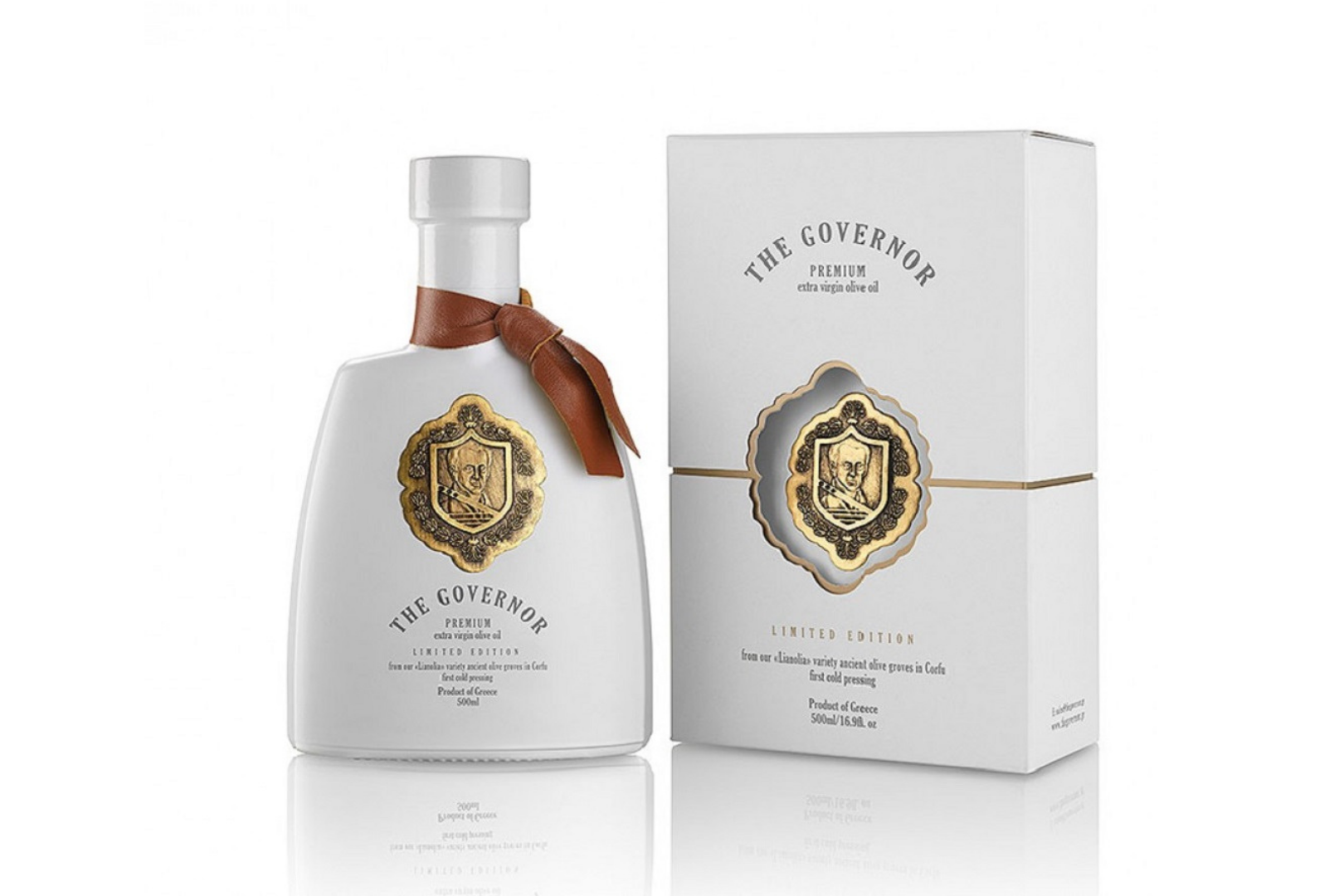
The Governor is a single-estate, single-cultivar oil. Early-harvest Lianolia olives are hand-picked from centuries-old trees on the Greek island of Corfu and pressed the same day by three generations of the Dafnis family. The World Olive Center for Health — a non-profit founded by University of Athens pharmacognosy professors — measures its polyphenols at 1,174 to 1,316 mg/kg, roughly ten times an ordinary supermarket oil, using the NMR method that underpins the EU health claim. Free acidity sits at 0.17%, a fraction of the 0.8% legal extra-virgin ceiling.
We are being transparent about one gap. Like nearly every premium estate oil, The Governor publishes no independent heavy-metal, pesticide, or phthalate panel. Its organic certification prohibits synthetic pesticides and GMOs at the farm, but that is not the same as a contaminant lab report — so on our scorecard, Heavy Metals reads "Not tested," not "pass." On freshness, purity of method, third-party verification, and transparency, nothing in the category is cleaner.
Who They Are
The Dafnis Family — What Makes Them Different
The Governor comes from a single grove on Corfu, where the Dafnis family has tended the indigenous Lianolia variety for three generations. Some of their trees are centuries old. Lianolia is a slow, low-yielding cultivar that most commercial producers avoid precisely because it does not maximize output — which is exactly why it survives here, valued for character rather than volume.
What sets the operation apart is timing and discipline. The olives are harvested early, while still green and unripe — the stage at which polyphenol content peaks and the oil turns naturally bitter and peppery. They are hand-picked and pressed the same day, before oxidation and fermentation can begin to raise acidity and degrade the fruit. Most supermarket oil, by contrast, is milled from riper olives that may sit for days after harvest, then blended across estates, countries, and seasons.
The family is unusually open with its numbers. Rather than relying on marketing language, they submit each harvest to the World Olive Center for Health for NMR analysis and republish the results — polyphenols, oleocanthal, and oleacein — every season. The oil ships in an opaque, pharmacy-style glass bottle designed to block the light that quietly destroys an olive oil's antioxidants on the shelf.
Claims & Certifications
What The Governor Claims — And What Each One Means
Independent Research & Lab Testing
What Outside Investigators Found — Including What We Can't Confirm
World Olive Center for Health — NMR analysis: The Governor's harvests are measured by NMR at the University of Athens, reporting total polyphenols of 1,174 to 1,316 mg/kg and oleocanthal of 476 mg/kg — placing it among the highest-phenolic commercially available olive oils in the world. The producer republishes fresh third-party figures with each new harvest. The current listing is at worldolivecenter.com — The Governor.
Lead Safe Mama — why this category needs scrutiny: Independent heavy-metal testing by Lead Safe Mama (Tamara Rubin) shows contamination is real in olive oil. In November 2024, she reported that 365 Whole Foods Organic Extra Virgin Olive Oil tested positive for trace lead. The full lab report is published at tamararubin.com — Whole Foods EVOO Report. We flag this to be clear that "organic" alone does not guarantee a clean heavy-metals result.
What has not been tested: The Governor itself has not been tested by Lead Safe Mama or Mamavation, and no independent heavy-metal, pesticide, or phthalate panel for this specific oil exists publicly. WOCH certifies phenolic content and authenticity — it is not a contaminant laboratory. We make no clean-metals claim The Governor has not earned, which is why its Heavy Metals score is zero, marked "Not tested," rather than a pass.
We review published lab results and independent investigator findings. We are not a laboratory and do not conduct our own testing. All primary sources are linked above for your own review.
The Broader Picture
Why "Extra Virgin" on the Label Often Means Almost Nothing
Olive oil is one of the most adulterated foods in the world. Because genuine extra-virgin oil is expensive and slow to produce, the supply chain is a magnet for fraud. A landmark University of California, Davis study found that the majority of imported "extra virgin" olive oils sampled from U.S. store shelves failed to meet the standard for that grade — many had been cut with cheaper refined or seed oils, or had oxidized into something that was no longer extra virgin at all. The label said one thing; the chemistry said another.
The most insidious fraud is "deodorizing." Mildly defective oil can be gently heated under vacuum to strip out the smell and taste of its defects, then sold as "extra virgin" because it looks and tastes clean. It is technically legal in many cases and almost impossible for a shopper to detect. The result is an oil stripped of the very polyphenols that make olive oil worth eating — the opposite of what an early-harvest, high-phenolic oil delivers.
Single-estate, same-day pressing is the structural fix. When one family grows, hand-picks, presses, and bottles a single cultivar on harvest day — and then submits the result to an independent academic lab for NMR verification every season — there is no anonymous blending step, no storage gap, and no incentive to dilute. The Governor's bitterness and pepper are not a flavor preference; they are the taste of polyphenols that fraud and over-processing remove. That is what a Gold Label olive oil should taste like.
"A University of California, Davis study found the majority of imported 'extra virgin' olive oils on U.S. shelves failed the extra-virgin standard. Single-estate, same-day pressing with independent NMR verification is the structural answer to a category built on fraud."
The Governor's polyphenol and acidity figures are verified by the World Olive Center for Health; no independent contaminant panel for this oil exists publicly.