Why We Chose It
The Bonham Conclusion
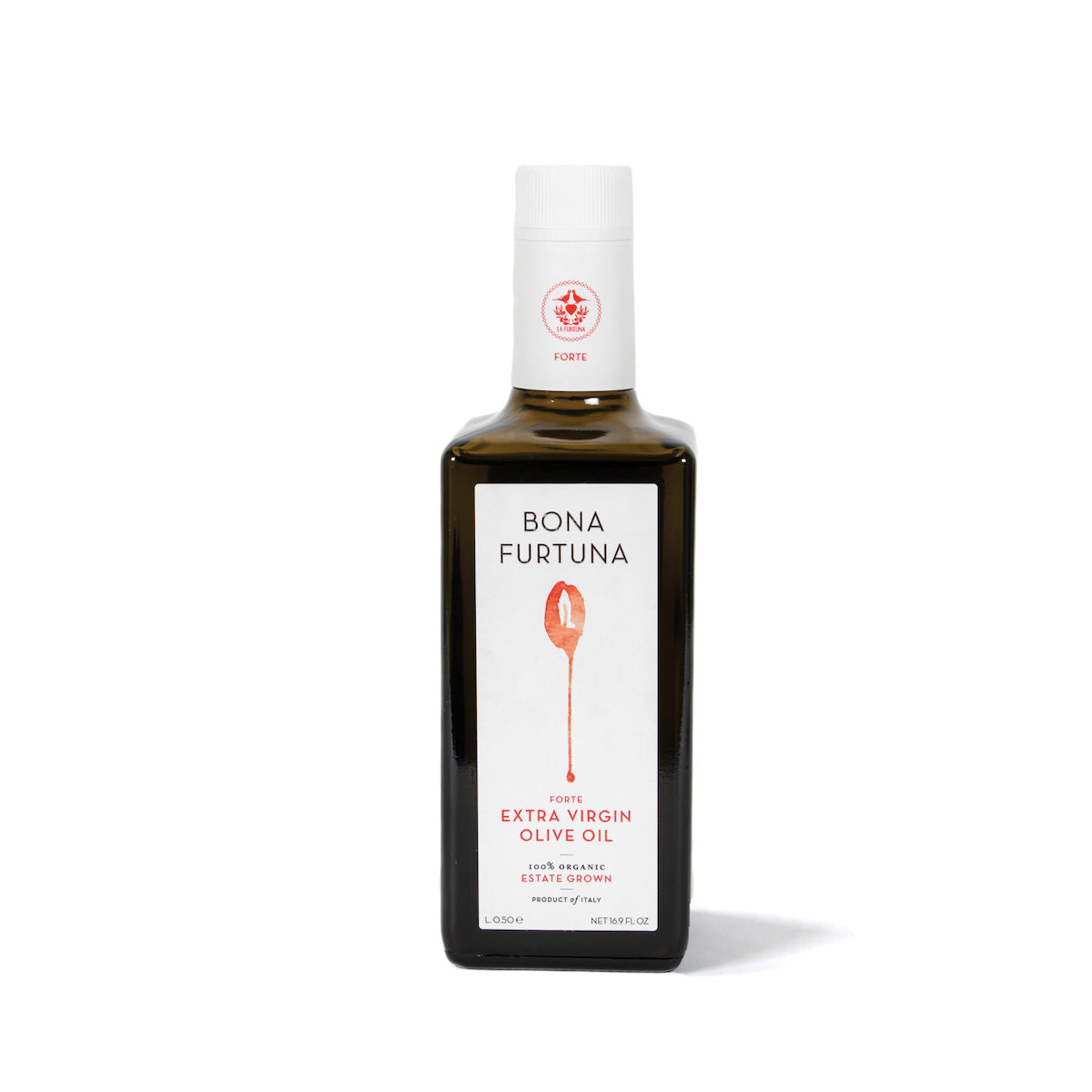
We chose Bona Furtuna's early-harvest Forte because it answers olive oil's core problem — a long, anonymous, fraud-prone supply chain — by having no supply chain at all. It is grown, pressed, and bottled on one Sicilian estate.
The Forte is the estate's early-harvest bottling: its greenest, most pungent olives, cold-pressed within 24 hours to lock in a free acidity of just 0.12–0.16%. It is certified organic, non-GMO, and farmed regeneratively.
We are transparent about the trade-off: at a lab-tested 250–400 mg/kg, Bona Furtuna is a high-polyphenol oil but not in the ultra-high (1,000+) tier of our early-harvest Greek picks, and like nearly every estate oil it publishes no independent heavy-metal panel. It earns its place as the heritage-and-purity pick.
Who They Are
Bona Furtuna — What Makes Them Different
Bona Furtuna farms a single 350-hectare estate, La Furtuna, in the Sicani Mountains above Corleone, Sicily. Among the roughly 12,000 organically farmed trees are heirloom Sicilian varieties — Nocellara del Belice, Biancolilla, Cerasuola and others — some estimated to be more than a thousand years old, with a few approaching 1,500.
The estate does everything on-site: grow, harvest, cold-press, and bottle. That vertical control is what lets them press within 24 hours of picking and guarantee a single origin on every bottle. They farm regeneratively — building soil health rather than depleting it — which over time means cleaner crops and lower contaminant uptake.
The Forte bottling is made from early-harvest fruit picked while green and unripe, the stage at which polyphenols peak and the oil turns pungent and peppery. It ships in dark glass to protect those compounds from light.
Claims & Certifications
What Bona Furtuna Claims — And What Each One Means
Independent Research & Lab Testing
What the Estate's Own Testing Shows — And What Isn't Tested
Bona Furtuna — lab-tested polyphenols: The estate reports lab-tested polyphenol content of 250–400 mg/kg and a free acidity of 0.12–0.16%, well under the 0.8% extra-virgin limit. Details are published on the producer's site at bonafurtuna.com — Forte.
What has not been tested: Neither Lead Safe Mama nor Mamavation has independently tested Bona Furtuna, and no public heavy-metal, pesticide, or phthalate panel exists for this oil. Its organic and regenerative certification governs the farming inputs, but that is not the same as a contaminant lab report — so we score Heavy Metals "Not tested" rather than as a pass.
We review published lab results and independent investigator findings. We are not a laboratory and do not conduct our own testing. All primary sources are linked above for your own review.
The Broader Picture
Why 'Single Estate' Is the Rarest Words on an Olive Oil Label
Most olive oil is blended and anonymous. A typical supermarket bottle can be a blend of oils from several countries and multiple harvests, brokered through a supply chain that a University of California, Davis study found frequently produces "extra virgin" oil that fails the grade — often cut with cheaper refined oil. The label rarely tells you which farm, which harvest, or even which country dominates.
A true single estate removes every one of those unknowns. When one family grows, presses, and bottles on its own land, there is no brokering step, no blending tank, and no incentive to dilute. You are buying one farm's harvest, traceable to the grove — which is exactly why single-estate, early-harvest oils sit at the top of any purity ranking.
Age is its own kind of quality. The estate's ancient trees are low-yielding and commercially inefficient, which is precisely why they survive here: valued for character and heritage rather than volume. That choice — depth over yield — is the through-line of a Gold Label oil.
A single Sicilian estate, heirloom trees up to 1,500 years old, cold-pressed within 24 hours at 0.12% acidity. 'Single estate' is the rarest and most valuable phrase on an olive oil label — and Bona Furtuna earns it literally.