Why We Chose It
The Bonham Conclusion
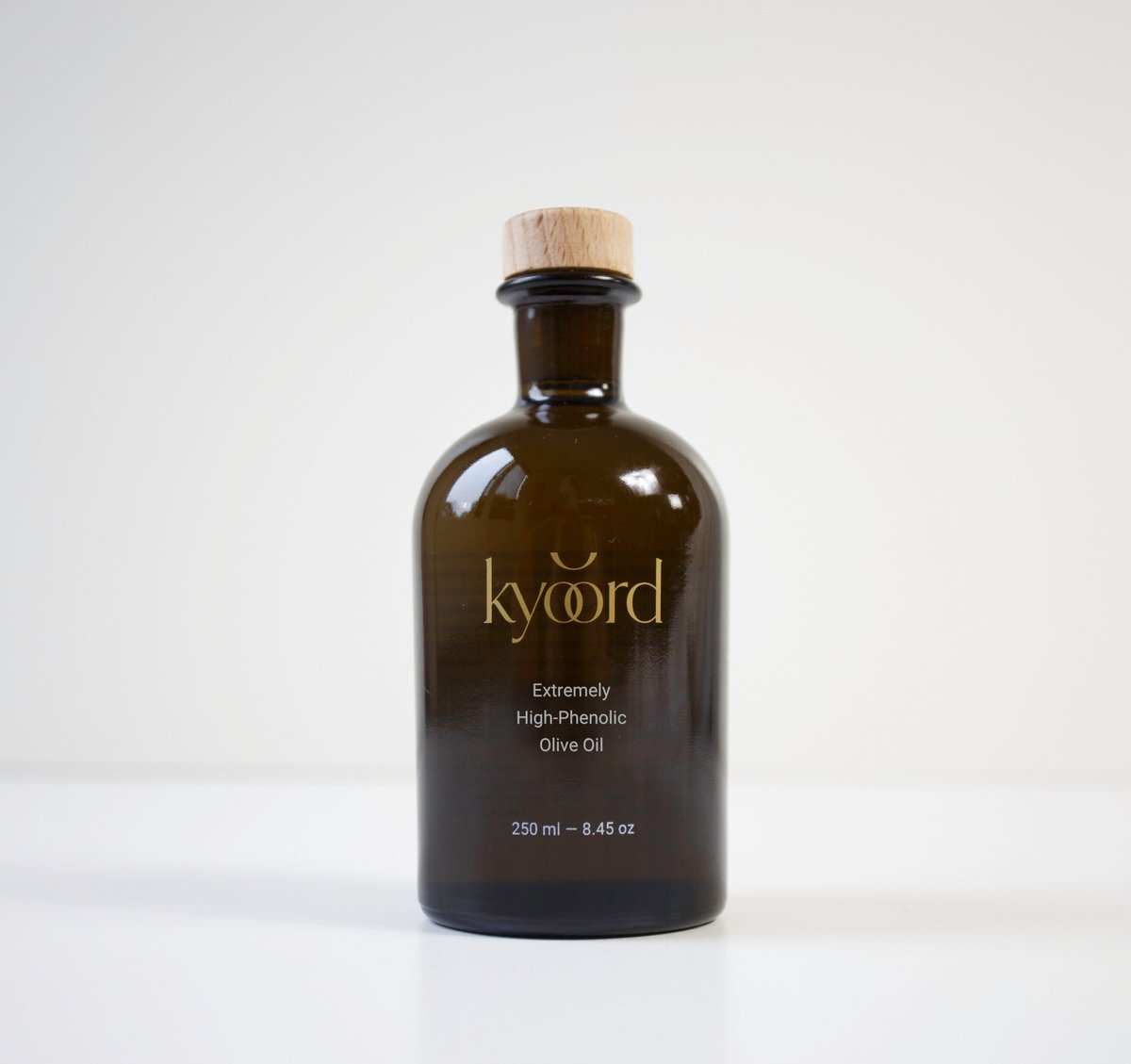
We chose kyoord's Extremely High-Phenolic oil because it carries more oleocanthal — the specific anti-inflammatory compound in olive oil — than anything else in this collection: 1,260 mg/kg, within a total polyphenol count of 2,012 mg/kg. That comes from pressing early-harvest Kalamon olives, the variety naturally richest in oleocanthal.
The credibility is unusual. kyoord was founded by Dr. Limor Goren, a cancer researcher and molecular biologist, and the company lab tests each batch and then re-tests it after three months of cold storage to prove the polyphenols are stable, not just high on bottling day.
We disclose the gaps directly: this bottling does not publish organic certification, a non-GMO claim, or an acidity figure, and there is no independent heavy-metal panel. It earns its Gold Label on measured potency and scientific transparency, not on an organic label.
Who They Are
kyoord — What Makes Them Different
kyoord was founded by Dr. Limor Goren, a molecular biologist and cancer researcher who studied olive oil's oleocanthal in the laboratory and then built a company to source it at its most potent. That scientific origin shapes everything: the product is sold on measured compounds, not on romance.
The Extremely High-Phenolic oil is made from Kalamon olives — the Kalamata variety, naturally the highest in oleocanthal — hand-harvested while extremely green and unripe from a small family farm in the southern Peloponnese, then milled under controlled conditions to maximize phenolic retention. It is left unfiltered and bottled in glass.
The standout practice is stability testing. Where most brands report a polyphenol number at bottling, kyoord re-tests its oil after three months of cold storage to confirm the compounds haven't degraded — verifying not just how potent the oil is, but that it stays that way.
Claims & Certifications
What kyoord Claims — And What Each One Means
Independent Research & Lab Testing
What the Lab Testing Shows — And What Isn't Tested
kyoord — third-party phenolic testing: The Extremely High-Phenolic batch tested 2,012 mg/kg total polyphenols and 1,260 mg/kg oleocanthal, with a re-test after three months of cold storage confirming stability. Figures are published at kyoord.com.
What is not verified: This bottling does not publish organic certification, a non-GMO claim, or a free-acidity figure, and no independent heavy-metal, pesticide, or phthalate panel exists for it. Lead Safe Mama and Mamavation have not tested it. We flag these gaps rather than assume compliance, and score Heavy Metals "Not tested".
We review published lab results and independent investigator findings. We are not a laboratory and do not conduct our own testing. All primary sources are linked above for your own review.
The Broader Picture
Why Oleocanthal Is the Compound Worth Chasing
Oleocanthal is olive oil's ibuprofen. Researchers found that oleocanthal produces the same throat sting as liquid ibuprofen because it acts on some of the same inflammatory pathways. It is the compound most associated with olive oil's anti-inflammatory reputation — and it is exactly what early-harvest, high-phenolic oils deliver in quantity.
Cultivar and timing decide how much you get. Not all high-phenolic oils are high in oleocanthal specifically; it depends heavily on the olive variety and how green the fruit is at pressing. The Kalamon variety, picked extremely early, is about as oleocanthal-rich a starting point as exists.
Stability is the overlooked half. A high number at bottling means little if the compounds fade on the shelf. By re-testing after months of storage, kyoord verifies the part of the equation most brands ignore — that the oil you open still carries what the label promised.
Oleocanthal produces the same throat sting as liquid ibuprofen because it acts on similar inflammatory pathways. kyoord's early-harvest Kalamon oil carries 1,260 mg/kg of it — the highest in this collection — and re-tests after three months to prove it lasts.