Why We Chose It
The Bonham Conclusion
The Clean Label Project is a nonprofit organization that tests consumer products for industrial contaminants — heavy metals, pesticide residues, plasticizers, and toxins — that never appear on ingredient labels but show up regularly in independent testing. They purchase products off retail shelves the way a consumer would, send them to accredited laboratories, and publish their findings. No brand pays to get a clean result. You either pass or you don't.
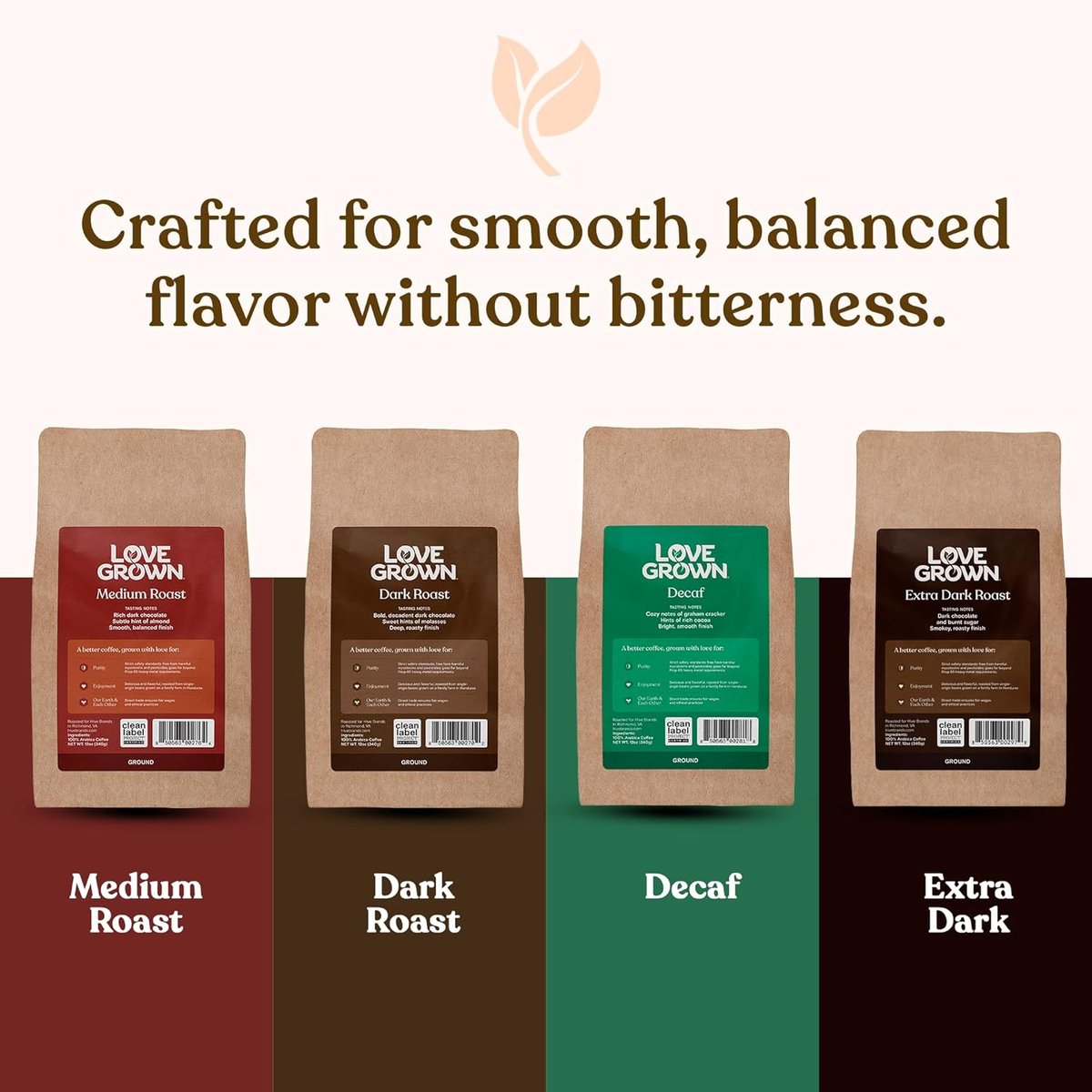
In their August 2025 coffee category study, the CLP tested 57 products from 45 top-selling brands and ran over 7,000 individual tests. They found heavy metals in 100% of coffee samples. They found pesticide residues, phthalates, and glyphosate breakdown products across the category — including in certified organic coffees. Love Grown is the only coffee brand in the world that pursued CLP certification and passed it. Not just on heavy metals, not just on pesticides, but on the full panel including phthalates and microplastics — categories almost no other coffee brand tests for at all.
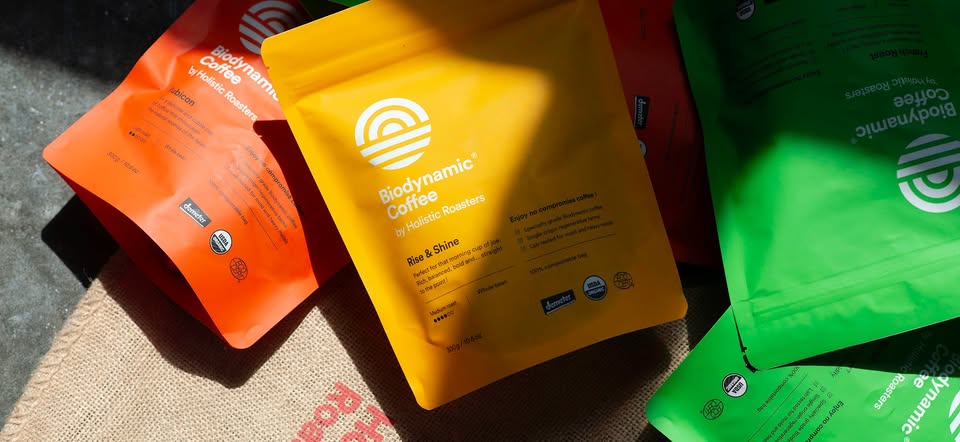
We also need to be honest about what Love Grown is not. It does not hold USDA Organic certification. The brand declares organic growing practices and the biology of their bean variety supports the no-pesticide claim — but the supply chain has not been independently audited. Under our Gold Label standard, strong testing plus honest declaration is sufficient. But the gap is real and we say so plainly. Customers who want the deepest supply chain certification should also read our review of Holistic Roasters, which holds both Demeter Biodynamic and USDA Organic certification with fully published COAs on every harvest. Both products earned Gold Label status. They are different, and the difference matters.
Who They Are
Love Grown — Built on a Single Uncompromising Standard
Love Grown started as a health-food brand and expanded into coffee with a clear commitment: that coffee should meet the same purity standards the brand holds for all its products, and that the only way to prove it is to test and certify it. Their partnership with the Clean Label Project was not a marketing exercise. It was a commitment to submit their product to the most rigorous independent consumer safety testing available for coffee and let the results speak.
The sourcing story is genuinely distinctive. Every bag is single-origin, meaning every bean comes from one farm — a family-owned operation in the mountains of Honduras growing the Parainema variety. Parainema is a cultivar developed by the Honduran Coffee Institute specifically for its natural resistance to coffee leaf rust — the most destructive fungal disease in the coffee world, responsible for wiping out entire harvests across Central America and forcing most growers to apply heavy fungicide treatments. Parainema resists the disease by design, which means the farm can grow clean coffee without the synthetic chemical inputs that create the residue problem in the first place.
The direct-trade relationship means farmers earn fair wages with stable pricing. Full traceability from a single farm means there is no blending with anonymous lots from unknown origins and no opportunity for contaminated material to enter the product invisibly.
Claims & Certifications
What Love Grown Claims — And What Each One Actually Means
Independent Research & Lab Testing
What the CLP Study Found — And Why It Changes the Conversation
Clean Label Project Coffee Category Study — August 2025: The CLP tested 57 coffee products from 45 top-selling brands, running over 7,069 individual tests for heavy metals, mycotoxins, pesticides, phthalates, glyphosate, and AMPA — a glyphosate breakdown product that persists in the environment longer than glyphosate itself. Key findings: heavy metals were detected in 100% of coffee samples. AMPA was found in 72% of all samples including every single organic coffee tested. Phthalates were detected in a significant proportion of samples. Love Grown's CLP certification means it was held to that same standard and passed. The full study is at cleanlabelproject.org/coffee-study.
Love Grown publishes test results on their product page. Unlike most brands that withhold results as proprietary, Love Grown posts their heavy metals test data directly at lovegrown.com/pages/love-grown-coffee-clp. This is meaningfully more transparent than the industry norm.
"Love Grown is the first and only coffee brand to earn Clean Label Project certification — the only program that tests finished coffee for phthalates and microplastics, benchmarked against California Prop 65 and EU safety limits."
Source: Clean Label Project Coffee Study, August 2025. Love Grown certification documentation at lovegrown.com/pages/love-grown-coffee-clp.
The Broader Picture
Why Phthalates and Microplastics in Coffee Are a Problem Nobody Is Talking About
The clean-coffee conversation has focused almost entirely on mycotoxins and heavy metals. Those are real concerns. But phthalates and microplastics — plasticizer compounds that leach from packaging materials — receive almost no attention in the clean-coffee community. The one-way degassing valve on virtually every bag of quality coffee is almost universally made from plastic in direct contact with the beans. A coffee that is clean at the farm can become contaminated in the bag.
The CLP found phthalates in coffee samples across their 2025 study. Phthalates are endocrine disruptors linked to developmental issues, fertility problems, and metabolic disruption in peer-reviewed research. Love Grown is one of the few coffees independently tested clean for this category. Our other Gold Label coffee, Holistic Roasters, addresses the same problem by using 100% compostable packaging with no plastic components including the valve and zipper. Together, these two products represent the most thorough available response to plastic contamination in coffee.