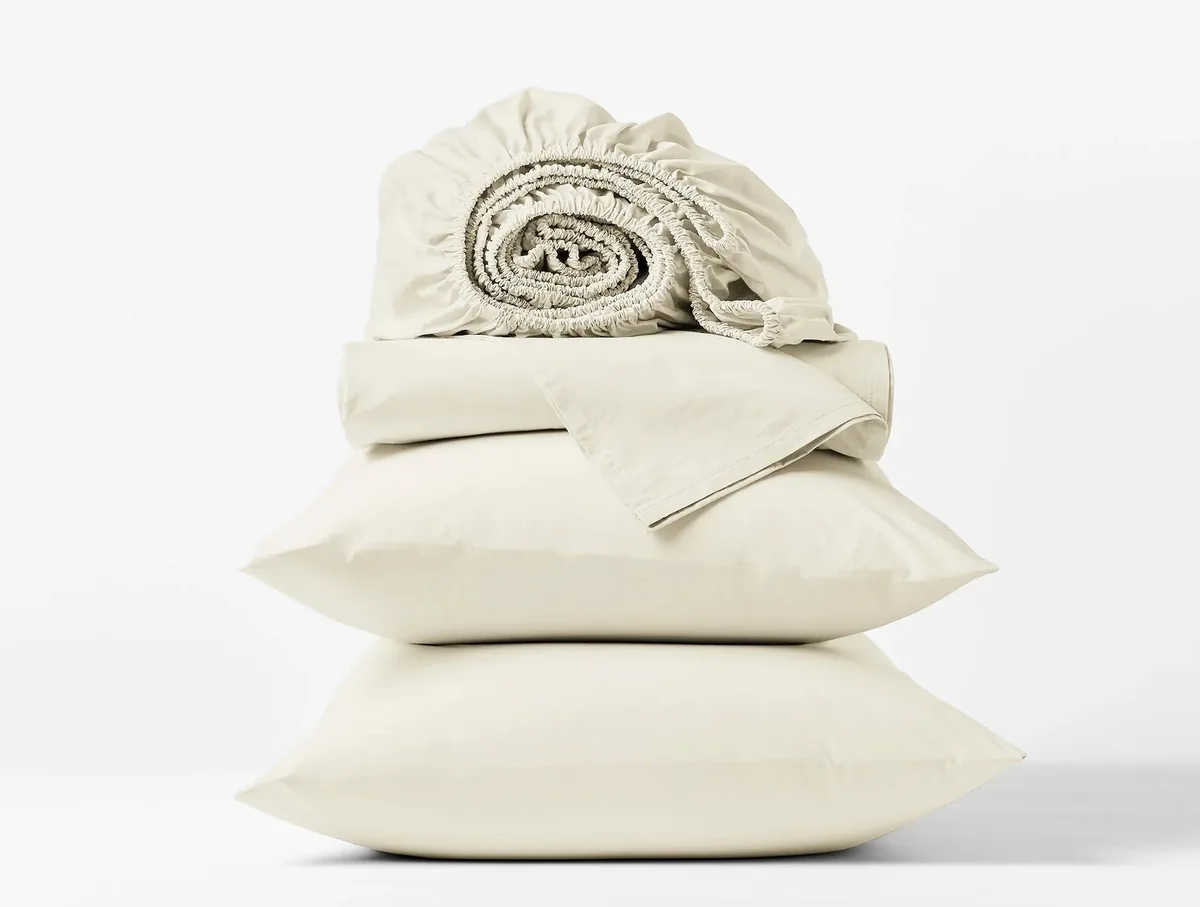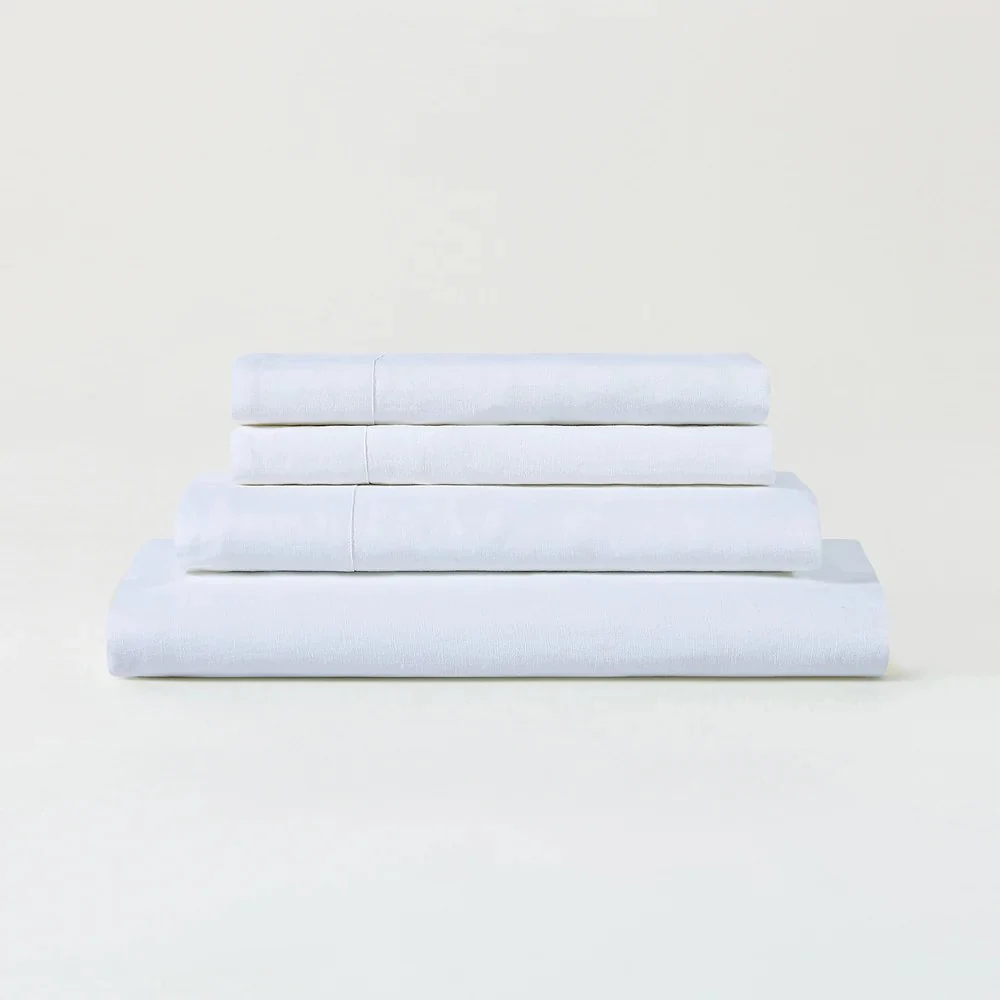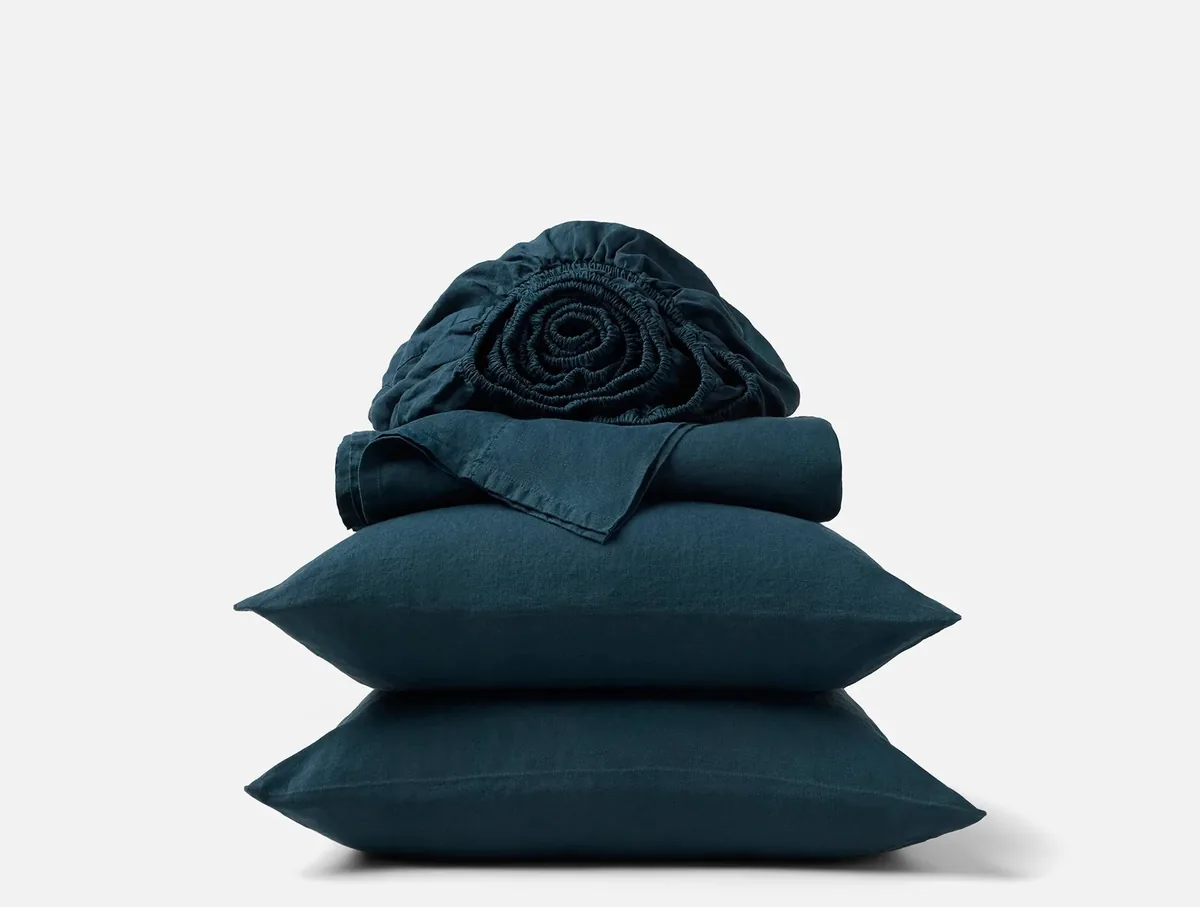
Why We Chose It
Every other linen we considered for the dyed slot failed in one of two ways: conventional flax under beautiful dye colors, or organic flax under dye chemistry nobody would specify. Coyuchi's relaxed linen is the only dyed linen we found where the organic-fiber standard stays fully intact and the dyes are certified rather than merely described — GOTS-approved low-impact inputs, restricted by the same audit that covers the farming.
We'll define this pick by what it is and isn't. It is certified-organic French flax with certified dye chemistry — the most rigorous dyed linen available. It is not natural or plant-dyed, and we won't borrow that language; if you want plant-derived color, our plant-dyed sateen pick is that product, and if you want no dye at all, our undyed linen is purer still. One question remains open, disclosed here and on the product page: how the white yarns in the chambray weaves are whitened is unpublished, and we're confirming the method directly with Coyuchi before considering this evaluation complete.
Who They Are
Coyuchi appears twice in our sheets collection, and the reason is consistency: thirty-plus years of organic textile sourcing, with certifications that cover the chain rather than the brochure. For this line, the flax is grown in France on a seven-year crop rotation — flax occupies a field roughly once every seven years, with food crops between, a practice that protects soil health and supports the farming communities rather than mining the land.
The linen is woven in Portugal and garment-washed — mechanically tumbled — for the relaxed, broken-in feel the line is named for. Color comes from low-impact dyes applied within the GOTS-audited chain. It's a product built by people who clearly understand that how linen is finished matters as much as where the flax grew.
Claims & Certifications
GOTS — Global Organic Textile Standard
GOTS does double duty on this product, and that's precisely why the pick works. On the farming side, it certifies the flax was grown organically without synthetic pesticides — and since no commercial GMO flax exists anywhere, the non-GMO question is settled by the plant itself. On the processing side, GOTS restricts dye chemistry to approved low-impact inputs that pass the standard's toxicology requirements, and prohibits chlorine bleach, formaldehyde resins, toxic azo dyes, and PFAS throughout. When we say “low-impact dyes” on this page, it means certified chemistry under audit — not a marketing adjective, which is what that phrase means almost everywhere else.
Independent Research & Lab Testing
No independent laboratory report exists for this product — nothing from Lead Safe Mama, LLC (tamararubin.com) or Mamavation (mamavation.com), and no public certificate of analysis on the finished fabric. The verification rests on the GOTS audit covering both the farming and the dye inputs.
Two confirmations are in progress directly with Coyuchi, and we'd rather show you the open items than pretend they don't exist: the whitening method behind the white chambray yarns (GOTS prohibits chlorine bleach but permits gentler methods, and we want the specific answer), and whether the brand's MADE SAFE certification extends to the linen line. This page updates when they answer.
The Broader Picture
Dyed linen is where good fiber goes to lose its story. The flax may be magnificent — French, low-input, naturally non-GMO — and then the fabric disappears into a dyehouse whose chemistry no one will specify, emerging as “stone blue” or “terracotta” with its purity now an open question. The dye step is the least transparent stage of textile production, and for most linen it's a black box.
The fix isn't avoiding color — it's certifying it. When the dye inputs are restricted by the same audit that verified the organic farming, the black box opens: the chemistry has names, toxicology limits, and an auditor. That's the standard this pick meets and the reason it stands beside our undyed picks rather than beneath them — a different answer for a different reader, held to the same scrutiny.