Why We Chose It
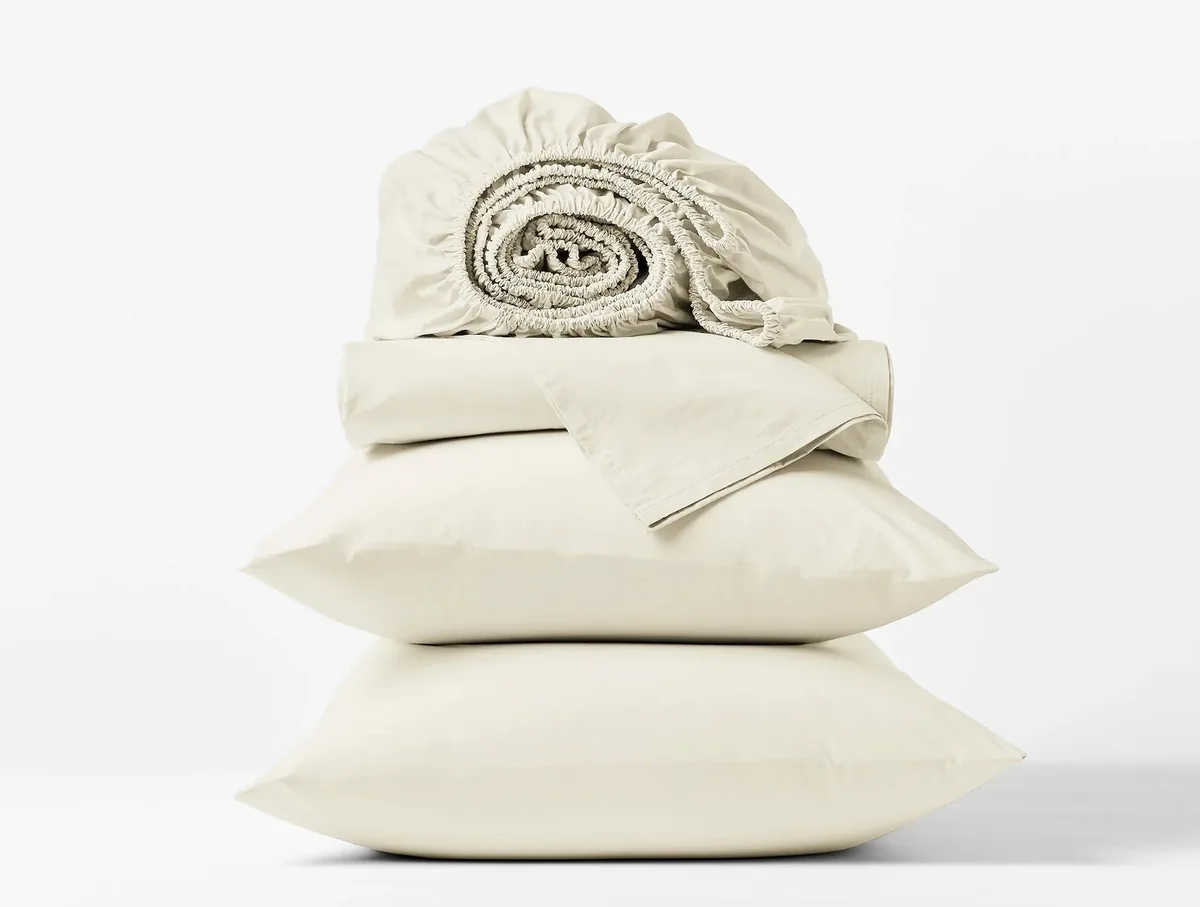
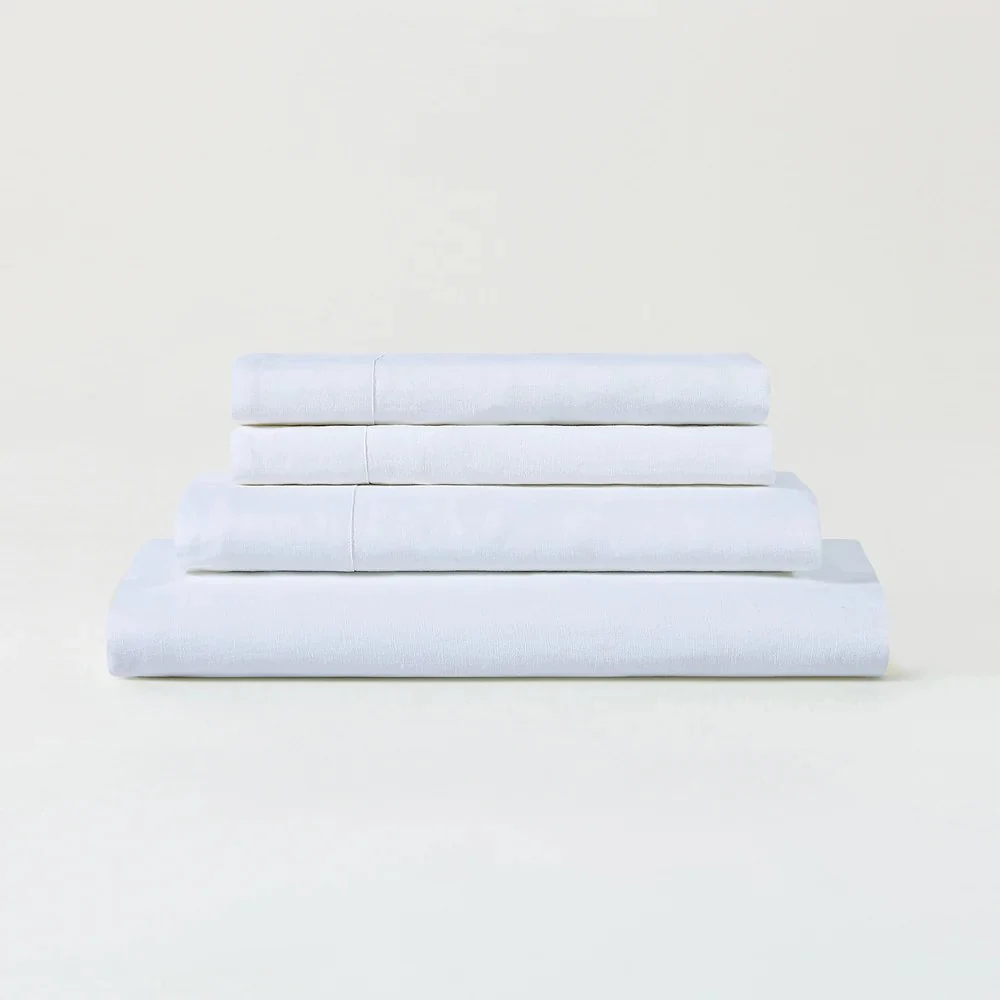
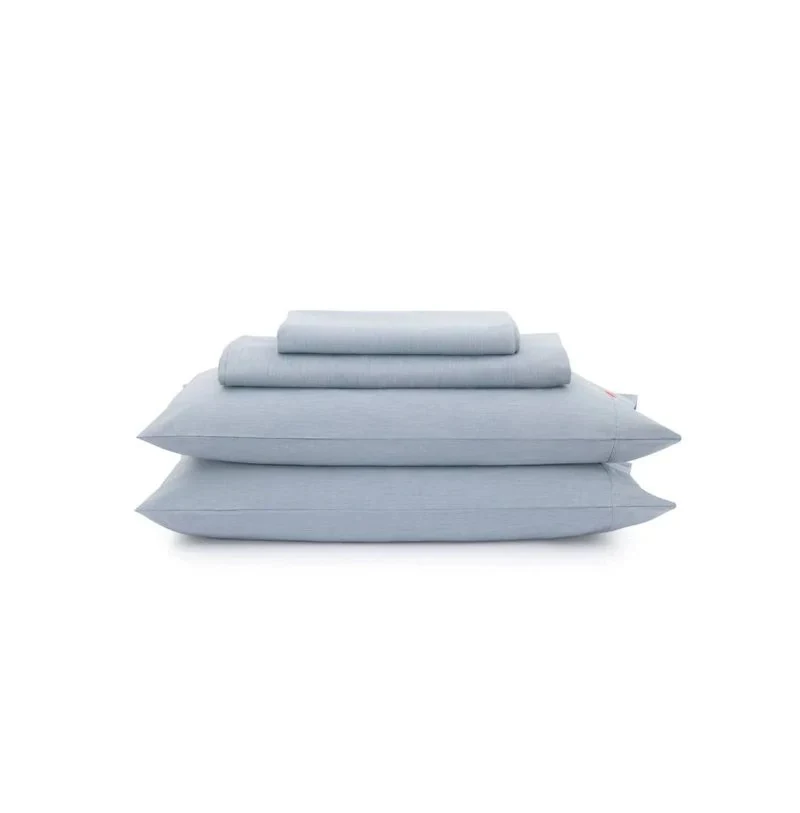
Every other dyed sheet we recommend manages synthetic chemistry well — restricts it, screens it, tests it. This is the only sheet we found that removes it entirely. Aizome dyes 100% GOTS-certified organic cotton exclusively with plants — indigo, madder, gallnut, pomegranate — washes the fabric with water alone, and finishes it with nothing but bio-enzymes. No synthetic dyes, no petrochemicals, no caustic soda, no silicone. The dye isn't a compromise this product tolerates; it's the reason the product exists.
It earned the Gold Label as the purest dyed fabric we have evaluated in any category, and we hold it to the same disclosure standard as everything else: the company's claim of testing proving zero synthetic content is its own statement until we confirm the lab is independent and nameable, we are verifying that the dye-fixation method is metal-free, and we could not confirm whether the company's FDA medical-device reference is a 510(k) clearance or only an establishment listing — either way, an FDA listing is not an approval, whatever the category's louder marketers imply.
Who They Are
Aizome began with a hospital bed. The founder's mother, undergoing cancer treatment, developed skin so sensitive that her own bedding became a source of irritation — and the search for fabric that couldn't irritate led to aizome, the centuries-old Japanese tradition of indigo dyeing, and eventually to a method for plant-dyeing modern bedding at scale. The company's name is the technique's name. That is not a brand story bolted onto a product; the product is the story.
We weight purpose-built companies heavily, and our experience across categories backs it up: when eliminating a contaminant is the founding mission rather than a positioning exercise, the details tend to hold. Aizome's details — water-only washing, bio-enzyme finishing, unbleached fiber, dye plants with centuries of skin-contact history — hold.
Claims & Certifications
GOTS — Global Organic Textile Standard
The foundation under the plant dyes is conventional in the best sense: 100% GOTS-certified organic cotton, meaning non-GMO seed, no synthetic pesticides, and an audited processing chain that prohibits chlorine bleach, formaldehyde resins, and PFAS. Aizome's plant-dye process operates inside that audited chain — the traditional method runs through the modern standard, not around it.
FDA Medical-Device Status — read carefully
Aizome references an FDA medical-device status, and we include it mainly to define it honestly — because we could not verify which status actually applies. There is a real difference between a 510(k) clearance, where FDA reviews a device and finds it substantially equivalent to one already on the market, and a simple establishment registration and product listing, which involves no FDA review of the product at all. The company's materials use language that could mean either. Until we confirm it, we make no FDA-based claim — and in every case, an FDA listing is not an FDA approval or endorsement of any health benefit. Brands in the wellness space routinely let "FDA registered" read as "FDA approved." We won't. It tells you nothing about purity, which is why it appears last and weighs least.
Independent Research & Lab Testing
No report on this product exists from Lead Safe Mama, LLC (tamararubin.com) or Mamavation (mamavation.com). Aizome states it holds testing demonstrating the absence of synthetic substances — “and we have the tests to prove it,” in the company's words — and we are confirming whether that testing is independent, performed by a nameable laboratory, and publishable. Until then we present it as the maker's own testing: credible in structure, not a substitute for third-party verification.
We're also confirming the dye-fixation method. Traditional plant dyeing sometimes relies on metallic mordants to bind color to fiber; Aizome's zero-synthetic position strongly suggests a cleaner approach, but we want the answer on record rather than inferred. The company's antibacterial claims come from its own commissioned lab work under controlled conditions — we note them without leading with them.
The Broader Picture
An estimated nine-tenths of the world's textiles are colored with synthetic dyes — petrochemical formulations whose manufacture is among the most polluting industrial processes on earth, and whose residues spend a third of your life against your skin. The industry's better actors manage this chemistry with certifications and limits. Almost no one questions whether it needs to exist at all.
Aizome's answer is older than the industry: plants dyed fabric for thousands of years before petroleum did, and several of the species it uses — indigo and madder especially — were valued in traditional medicine precisely for their gentleness on skin. Pairing that lineage with GOTS-audited organic cotton and water-only processing produces something genuinely rare: a dyed sheet whose ingredient list reads like a garden. In a collection built on subtraction, this is the one pick that wins by what it adds — and what it adds grew in soil.