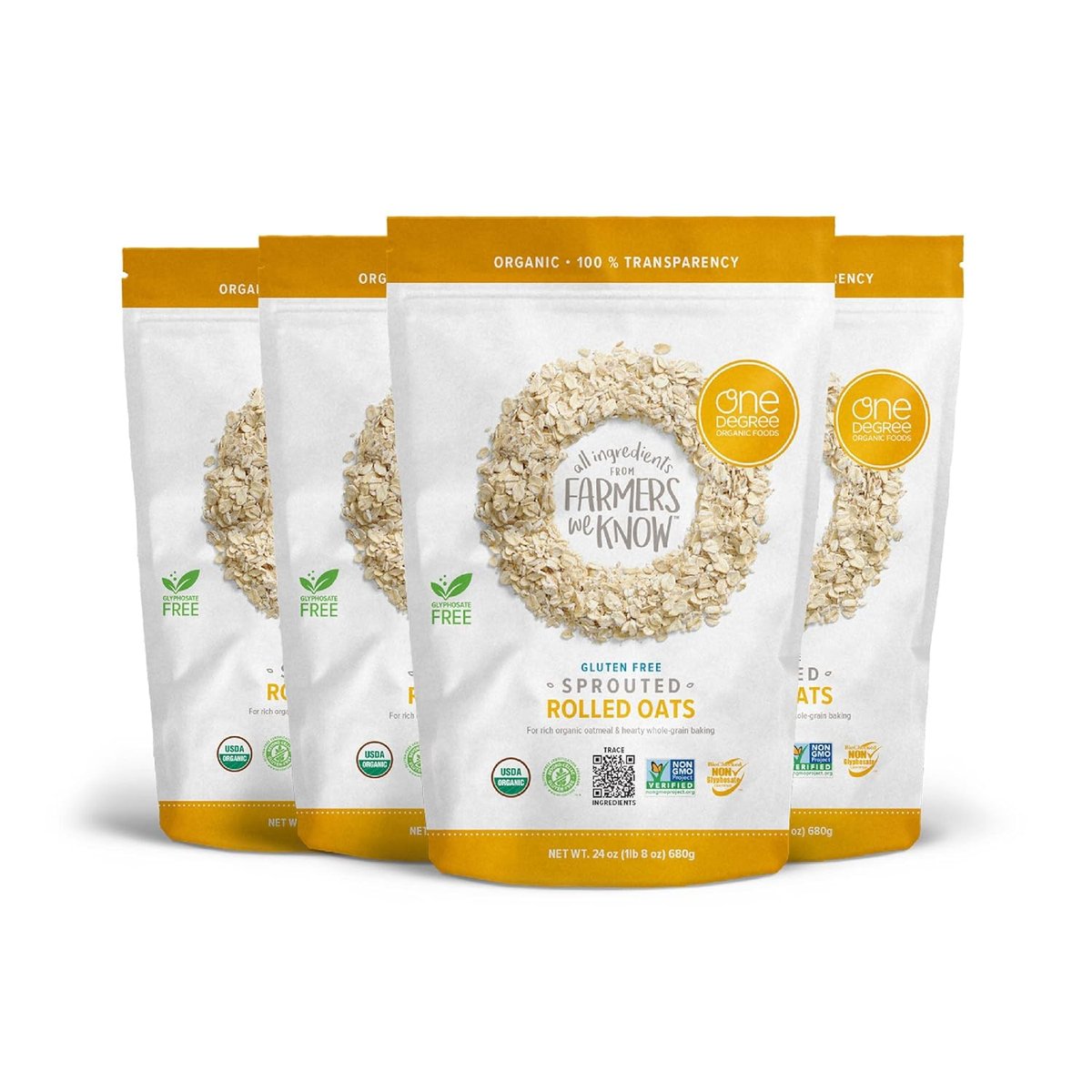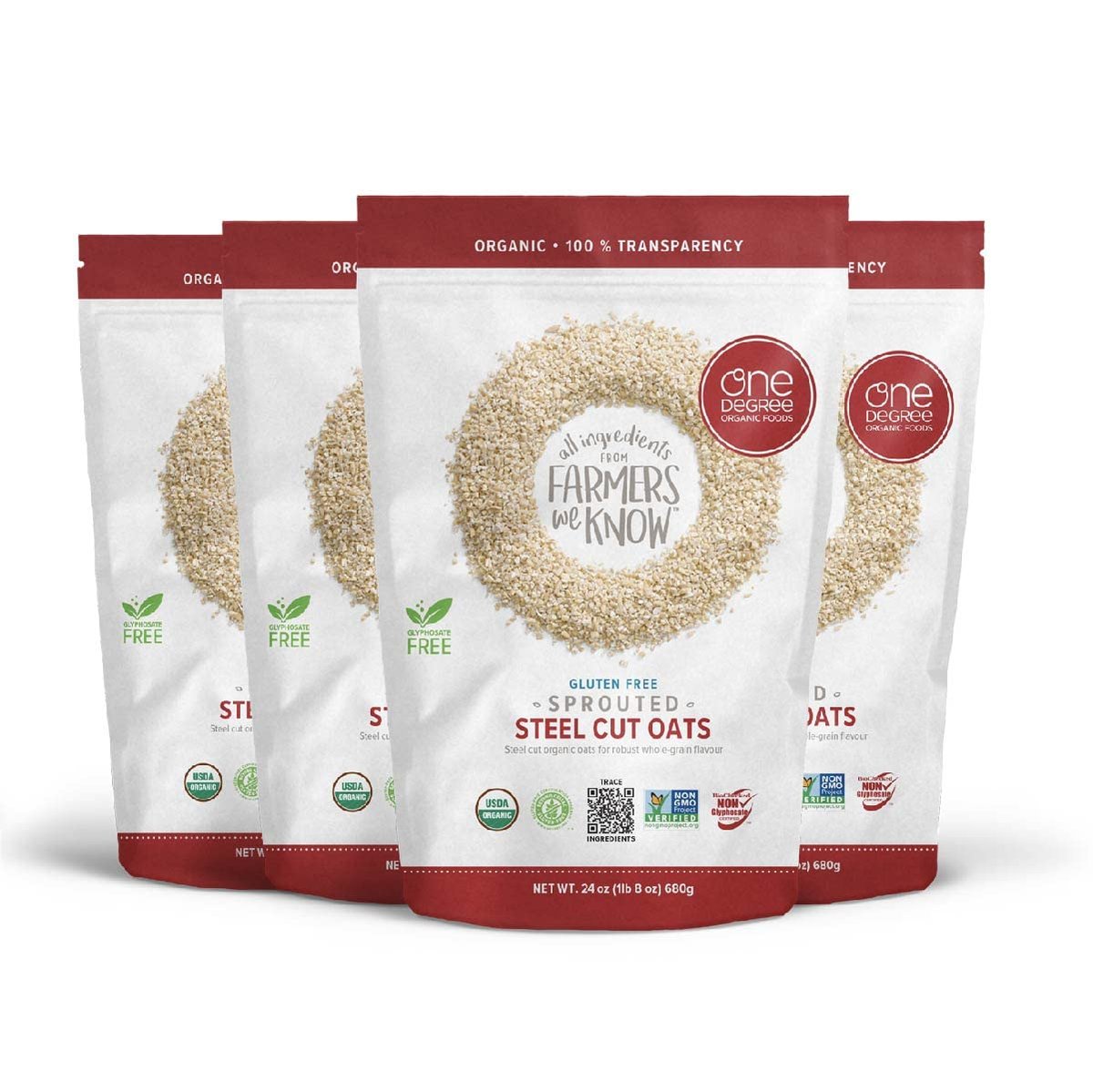
The Case for Steel Cut
Why Steel Cut Is the Purest Oat Format
All three oat formats — steel cut, rolled, and quick — start from the same oat groat, the whole grain with only the inedible hull removed. What happens next is where they diverge. Steel cut oats are simply chopped with a steel blade. That is the entire process. No steaming, no flattening, no further treatment of any kind. The groat is cut and packaged.
Rolled oats go further. The groat is first steamed to soften it, then passed through rollers to flatten it into the familiar flake. The steaming step is an industrial process that changes the grain's structure, opens its surface, and accelerates the breakdown of its natural fiber matrix. Quick oats take this further still — rolled thinner and sometimes pre-cooked so they hydrate in minutes. Each step away from the whole groat is a step away from the grain's original nutritional integrity.
The result: steel cut oats have a significantly lower glycemic index than rolled oats, meaning they digest more slowly, raise blood sugar more gradually, and sustain energy longer. The intact grain structure means more of the original fiber, protein, and mineral content reaches your digestive system in the form your body is designed to process. For a family eating oats regularly, that difference compounds over time.
Steel cut oats skip the steaming and flattening steps entirely. What you are eating is the whole oat groat — chopped once, packaged, and nothing else done to it.
Why Certification Still Matters
The Format Doesn't Change the Contamination Risk
The purity advantage of steel cut oats is real — but it applies to processing, not to what happens in the field. Glyphosate is applied to oat crops at harvest, before the grain ever reaches a facility. The herbicide residue is on the groat itself. Whether that groat is then steel cut, rolled, or quick-processed is irrelevant to its glyphosate content. The contamination risk is identical across all three formats, and it is significant — the Environmental Working Group has found glyphosate in 100% of conventional oat samples tested across multiple rounds of testing since 2018.
This is why we hold every oat format to the same certification standard. One Degree Organics is the only brand we found that maintains BioChecked Non-Glyphosate Certification with ongoing monthly batch testing across all of their oat products — rolled, steel cut, and quick oats. That commitment does not change by format. Neither does our requirement for it.
Environmental Working Group oat testing — ewg.org. One Degree Organics testing documentation — onedegreeorganics.com/testing-transparency.
Full Transparency
What We Know and What We Don't
One Degree's sprouted rolled oats have been independently tested for heavy metals twice by Lead Safe Mama, LLC — an independent, community-funded consumer safety organization whose work has led to six FDA and CPSC product recalls. Their May 2025 retest found trace arsenic at approximately 9 ppb and trace cadmium at low levels in the rolled oats format. The steel cut format has not been independently tested for heavy metals by any comparable organization. One Degree's quick oats format showed higher cadmium than the rolled oats, which tells us that format-specific variation exists within the same brand's product line.
We cannot assume the steel cut format's heavy metals results would match the rolled oats. We disclose this gap because it is real, and because our standard requires us to say plainly what we do not know. What we do know is that One Degree's steel cut oats carry the strongest certification stack available for this format — and that no competing steel cut oat brand has been independently tested at all. The absence of published data on other brands does not mean they are cleaner. It means nobody has looked.
Lead Safe Mama heavy metals testing of One Degree rolled oats — tamararubin.com.