Why We Chose It
The Bonham Conclusion
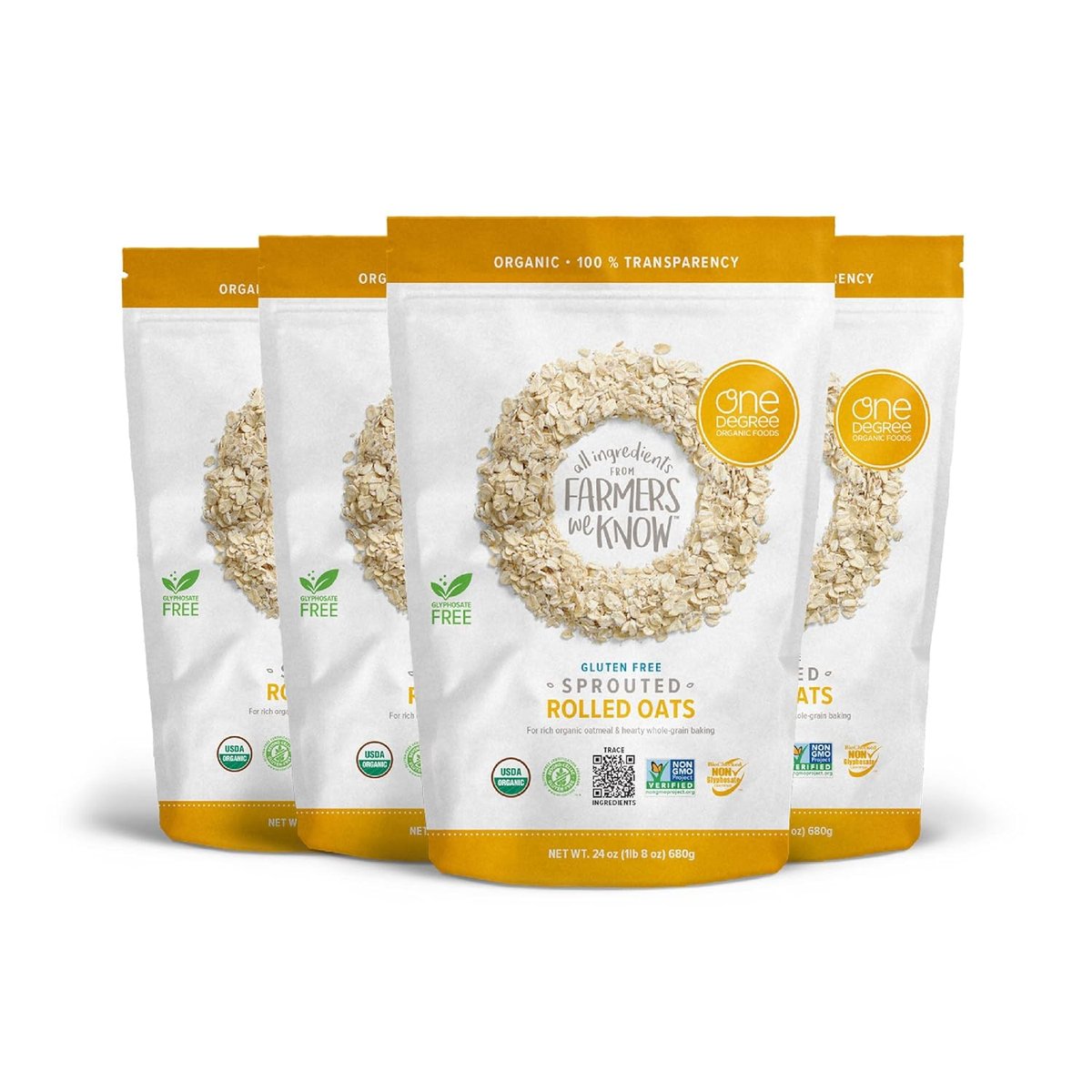
We chose One Degree Organics because it is the most independently verified oat product we found — and in a category with a documented glyphosate problem, verification is everything. They hold BioChecked Non-Glyphosate Certification with ongoing monthly batch testing of their oat supply. That is not a one-time claim. It is a continuous, third-party-documented commitment that distinguishes them from every other brand we evaluated, including organic ones.
The certification stack adds up to something we don't see often: USDA Organic, Non-GMO Project Verified, BioChecked Glyphosate-Free, Certified Gluten-Free, Certified Vegan, and Kosher — on a single-ingredient product. Every bag carries a QR code that traces directly to the specific farm that grew the grain inside. One Degree personally visits every farm they partner with. That level of traceability is genuinely rare.
Independent heavy metals testing by Lead Safe Mama, LLC previously showed non-detect results across all four metals tested. A May 2025 retest found trace arsenic at approximately 9 ppb and trace cadmium at low levels — we are disclosing this in full. For context, rice contains arsenic at roughly 25–50x these concentrations in comparable testing. One Degree remains the cleanest independently-tested oat product on record. The full lab report is at tamararubin.com — 2025 One Degree Retest.
Independent Research & Lab Testing
What Outside Investigators Found
Lead Safe Mama, LLC is an independent, community-funded consumer safety organization run by Tamara Rubin — a multiple federal-award-winning advocate for childhood lead poisoning prevention. They purchase products from retail and send them to accredited third-party labs, publishing raw results publicly. Their work has led to six FDA and CPSC product recalls. Their testing of One Degree oats, including the 2025 retest results, is available at tamararubin.com — One Degree Rolled Oats.
The Environmental Working Group has tested oat-based products repeatedly since 2018 and found glyphosate in 100% of conventional oat samples. A significant portion of organic oat products also tested positive due to drift from neighboring farms. EWG's findings confirm that organic certification alone is not a guarantee of glyphosate-free status — which is why BioChecked independent testing matters. Full findings at ewg.org.
We review published lab results and independent investigator findings. We are not a laboratory and do not conduct our own testing. All primary sources are linked above for your own review.
The Broader Picture
Why Most Oats Did Not Make the Cut
Glyphosate is applied to conventional oat crops just before harvest as a desiccant — it dries the plant uniformly to make mechanical harvesting easier. The result is herbicide residue applied directly to the grain at maximum concentration. EWG testing found glyphosate in every conventional oat product they have tested. Even Bob's Red Mill — one of the most recognized organic grain brands — faced a federal class action after glyphosate was detected in both their organic and conventional oats. USDA Organic prohibits use of glyphosate on certified farms, but it cannot prevent atmospheric drift from neighboring operations.
Most oat brands have simply never been independently tested for heavy metals at all. The absence of published data is not the same as a clean product — it just means nobody has looked. One Degree's apparent disadvantage on heavy metals is partly an artifact of being the most scrutinized oat product in the category. The brands with no published testing data are not necessarily cleaner. They are just untested.
"Glyphosate can drift into organic fields through wind and water — which is why we test every batch independently. USDA Organic is the floor, not the ceiling."
Source: One Degree Organics FAQ — onedegreeorganics.com/faqs.