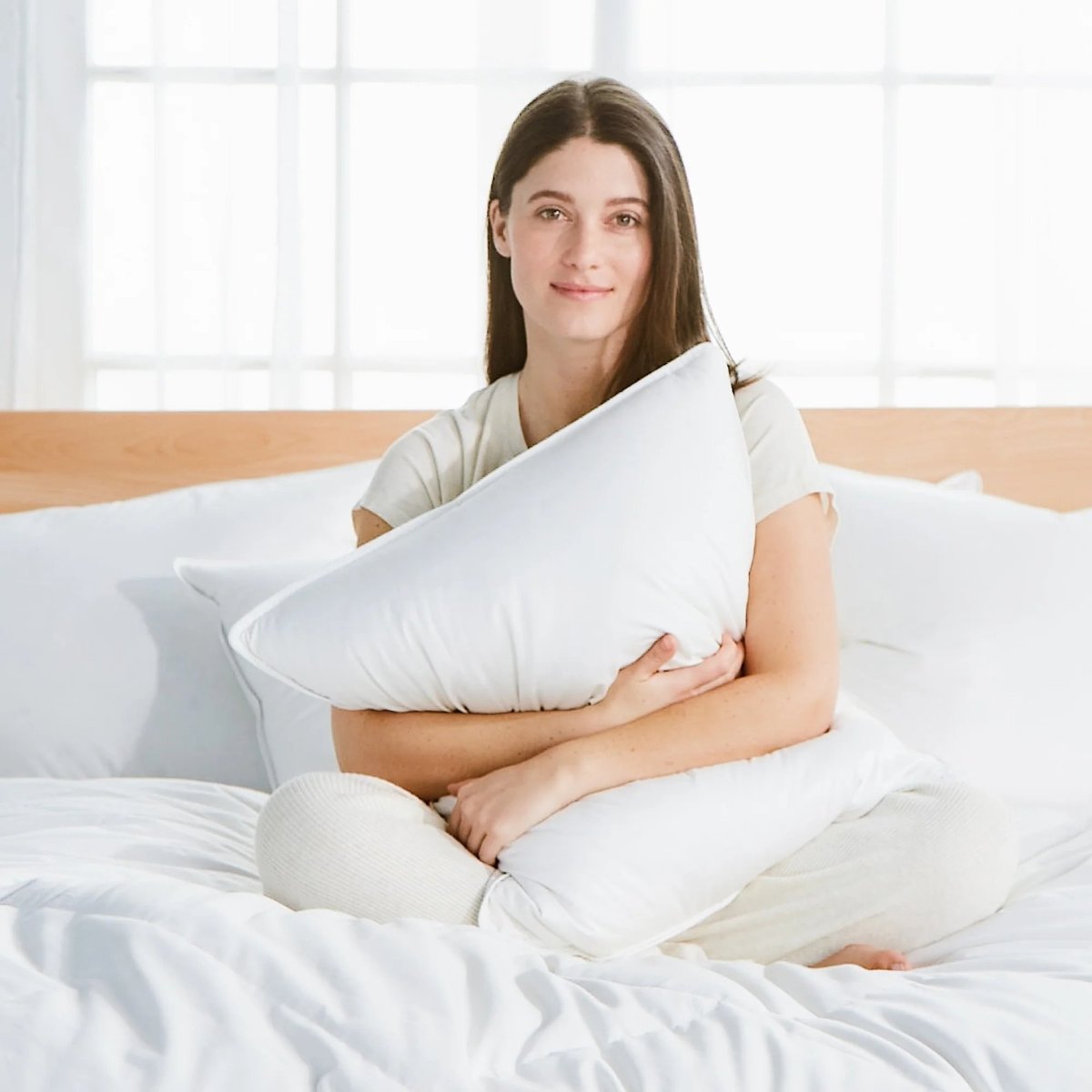
Why We Chose It
Our verdict on the pillow category started with a hard question: how do you make a pillow soft, safe, and fire-compliant without chemistry? Most of the market answers with flame retardants and petroleum fills. Wool answers it by being itself — it is naturally flame-resistant, so a wool pillow meets fire-safety expectations without a single added chemical. That structural advantage is why wool tops our pillow collection.
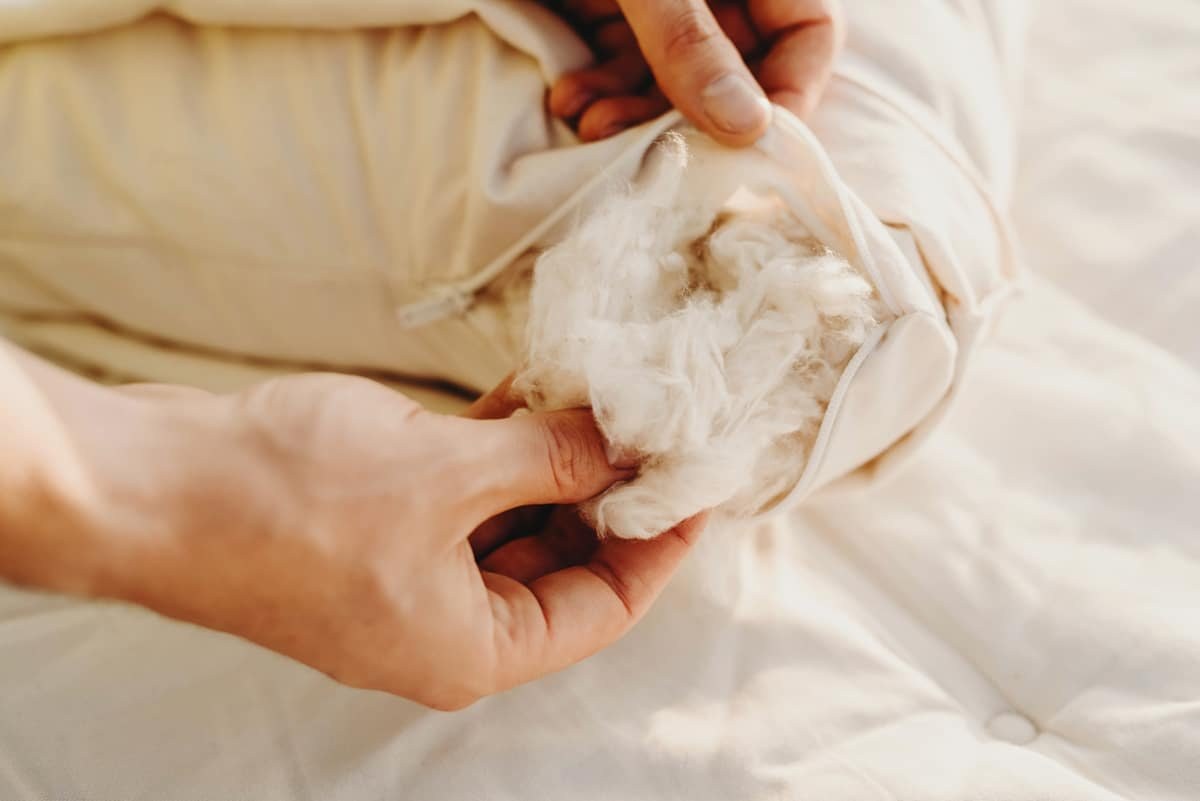
Holy Lamb Organics earned the Gold Label because it takes the cleanest fill and refuses to dirty it. Their wool is never carbonized and never bleached — the two chemical steps most commercial wool passes through — and sheep dipping is never practiced. We'll disclose the one nuance plainly: of their two wool sources, only the New Zealand option is GOTS-certified; the US co-op wool is declared clean by the maker. Both clear our bar, and we tell you which is which.
Who They Are
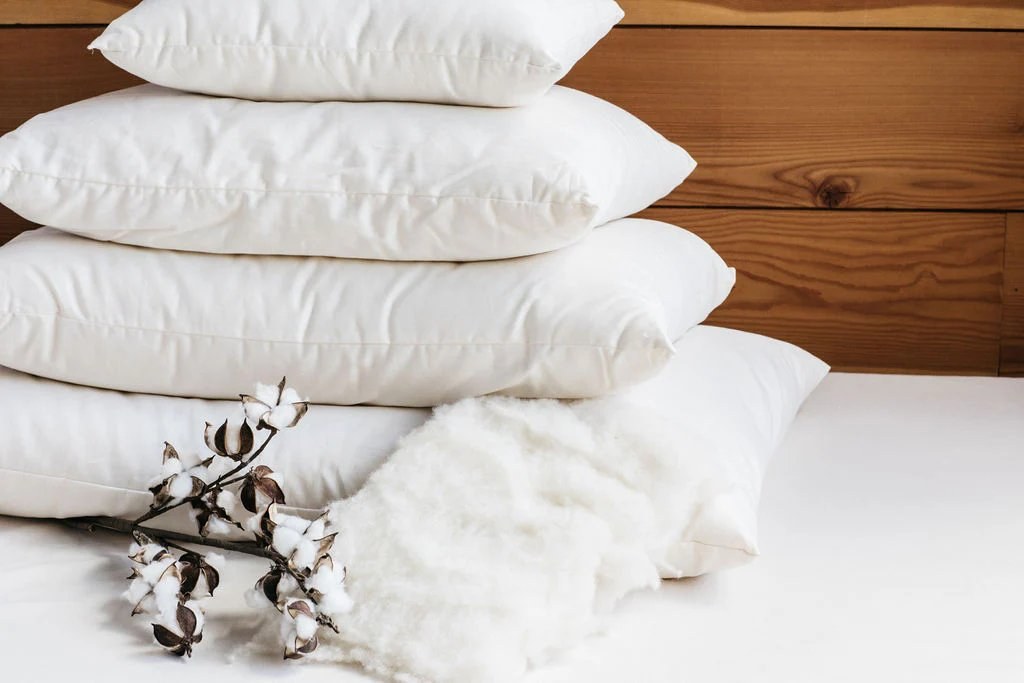
Holy Lamb Organics is a small, women-led workshop in a rural town near Olympia, Washington, where every pillow is hand-built rather than machine-stuffed. They work only in organic cotton, natural and organic wool, and natural latex — nothing synthetic enters the building. Their organic cotton shell is grown in India and finished in a GOTS-certified facility, never bleached or dyed.
What distinguishes them is a refusal to take the easy chemical shortcuts the wool industry treats as routine. Carbonizing wool in an acid bath to strip vegetable matter is standard practice; they don't do it. Bleaching is standard; they don't do it. The result is wool kept as close to the sheep as a finished pillow allows — and a product that composts cleanly at the end of its life, leaving no waste behind.
Claims & Certifications
GOTS — Global Organic Textile Standard
GOTS certifies Holy Lamb's New Zealand wool option as organic and non-GMO, and certifies the organic cotton sateen shell on every pillow. The standard audits the full processing chain and prohibits chlorine bleach, formaldehyde resins, and PFAS. It's worth understanding the scope precisely: the GOTS certificate covers the NZ wool and the cotton shell. The alternative US co-op wool is covered instead by the maker's processing declaration, which we treat as credible but distinct from certification — and disclose as such.
The Maker's Processing Refusals
Some of the most important purity facts about wool aren't certifications — they're the chemical steps a maker chooses not to take. Holy Lamb's wool is never carbonized (no acid bath to burn out vegetable matter) and never bleached, and the sheep are never dipped in pesticide. These are declarations rather than third-party audits, but they describe processes that simply don't happen, and they're consistent with the company's GOTS-certified facility and three-decade track record.
Independent Research & Lab Testing
No report on this product exists from Lead Safe Mama, LLC (tamararubin.com) or Mamavation (mamavation.com), the independent consumer laboratories we cite by name elsewhere on this site, and no public certificate of analysis exists for the finished pillow.
The verification that does exist is real: GOTS certification on the New Zealand wool and the organic cotton shell, plus a detailed and specific processing declaration from a three-decade-old maker. We'd welcome independent lab testing of the finished pillow; none exists yet, and we say so rather than imply the certifications cover more than they do.
The Broader Picture
The pillow is one of the most quietly chemical-laden objects in a bedroom. Conventional fills — polyester, memory foam — are petroleum products that off-gas VOCs, and most pillows rely on flame-retardant chemistry that research has linked to hormonal and developmental harm. You breathe against this object for a third of your life, inches from your face.
Wool's answer is structural rather than additive. It resists ignition because of its own keratin and moisture content, so a wool pillow is fire-safe without treatment — the contamination problem is avoided rather than managed. Pair that with a maker who refuses carbonizing, bleaching, and sheep-dipping, and you get a pillow whose purity comes from what was never done to it. That is the cleanest path through this category, and it's why wool leads our collection.