Why We Chose It
The Bonham Conclusion
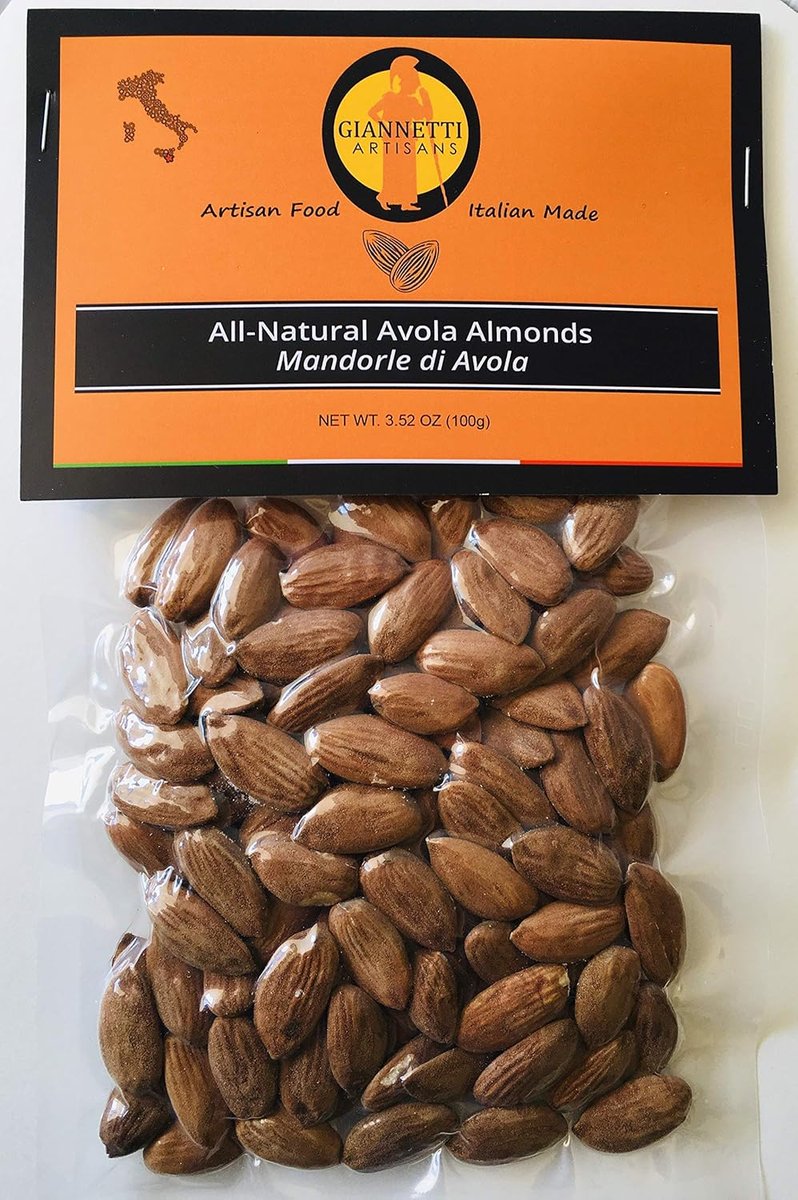
We chose Giannetti Artisans Pizzuta d'Avola because it is the most ancient, most naturally pure almond variety accessible to American consumers — and because it comes from a country where the industrial practices that destroyed the American almond simply do not exist.
In the United States, every commercially sold almond has been pasteurized by law since 2007. The two permitted methods are steam heating — which degrades live enzymes and oxidizes heat-sensitive natural fats — and propylene oxide (PPO) fumigation. PPO is a synthetic chemical classified as a probable human carcinogen by the EPA. It is banned for use on food in most other countries. It is the same compound used to make antifreeze, polyurethane foam, and hydraulic fluid. Over 68% of US almonds are treated with it. The bags say "raw." The law requires no disclosure of treatment method. This is the almond industry in America.
Italy has no such mandate. There is no equivalent law requiring almonds to be pasteurized. There is no permitted use of propylene oxide on food. The small artisan farms of southeastern Sicily growing Pizzuta d'Avola almonds have been operating with the same traditional methods for centuries — bamboo canes, tarps, sun-drying — long before any concept of industrial fumigation existed. These almonds arrive in the US in the same natural state they left the farm. Giannetti Artisans imports them directly from Avola, Sicily, and sells them to American consumers as what they are: 100% Pizzuta d'Avola almonds from Italy. Single ingredient. Nothing added.
We are transparent about one gap: Giannetti does not explicitly confirm their almonds are unpasteurized on their listing. Italy's food standards and the artisan sourcing model make the logical conclusion clear — but they have not stated it in writing, and we say so honestly. On organic certification, the Pizzuta d'Avola variety is by nature a low-intervention crop that thrives in dry volcanic soil with almost no pesticide input, and EU pesticide regulations exceed USDA organic standards — but formal certification has not been confirmed. We present both of these gaps directly. They do not change the fundamental reality of what this almond is: the most naturally pure, most historically grounded, most nutritionally superior almond available to an American family today.
Who They Are
Giannetti Artisans — Bringing Sicily's Food Heritage to American Families
Giannetti Artisans is a small American importing company based in Highwood, Illinois, founded to bring authentic artisan Italian food products directly to American consumers. Their focus is on sourcing from specific named regions in Italy — not generic Italian imports but products tied to a particular place, a particular variety, a particular tradition. Their Pizzuta d'Avola almonds are sourced from Avola, a small town in the Province of Syracuse in southeastern Sicily that gives this almond its name and its entire identity.
The Avola almond has been cultivated in this specific territory since antiquity — brought to Sicily by the Greeks, refined over centuries of traditional farming in one of the sunniest and most volcanic regions of Italy. The town of Avola and the surrounding Val di Noto are the only place in the world where Pizzuta d'Avola almonds can be grown with their full characteristic flavor and nutritional profile. The combination of volcanic soil, arid Mediterranean climate, and January bloom — which makes these trees uniquely sensitive to their environment — produces an almond that cannot be replicated anywhere else.
Giannetti imports these almonds and makes them available on Amazon, which is how an American family in any state can access what is genuinely the finest almond in the world. They are not a large company with industrial supply chains. They are an importer that understands the product well enough to source it correctly and present it honestly. The single-ingredient label — 100% Avola Almonds, Pizzuta variety — is exactly what it should be.
Claims & Certifications
What Makes Pizzuta d'Avola Almonds Genuinely Different
Independent Research & Lab Testing
What We Know and What Remains Open
No independent third-party heavy metals testing has been published for Giannetti Artisans Pizzuta d'Avola almonds as of the date of this post. Lead Safe Mama, LLC has not published a lab report for this product. No public Certificate of Analysis is available from Giannetti. We say this directly because our readers deserve to know which of our Gold Label products have been independently confirmed clean at the contaminant level and which have earned their designation on the strength of sourcing, origin, and product integrity. Giannetti is the latter. We believe these are among the best almonds in the world. We have not seen lab data confirming contaminant-free status, and we will not claim otherwise.
The aflatoxin picture is more favorable than for most almonds because of the Pizzuta d'Avola shell structure. The thicker, more impermeable shell documented in research on this cultivar provides a meaningful natural barrier against the Aspergillus mold species that produce aflatoxins. This does not substitute for independent testing, but it is a genuine structural advantage that distinguishes this variety from both California almonds and other European varieties with thinner shells.
On pesticides: Pizzuta d'Avola almonds are among the most naturally low-intervention tree nuts in the world. The variety thrives in dry volcanic soil in an arid Mediterranean climate, growing conditions that are inhospitable to most of the pests that drive pesticide use in California's water-intensive almond industry. EU pesticide regulations are more restrictive than USDA standards by a meaningful margin — many compounds permitted in US agriculture are banned in the EU. No independent pesticide testing COA is available for this product, but the structural conditions of its cultivation make it one of the lower-risk options in this category.
The most meaningful fact about these almonds is not a lab result — it is where they come from and what they are. The Pizzuta d'Avola is a variety that has been cultivated in the same volcanic corner of Sicily for thousands of years, using practices that predate industrial agriculture by millennia. The chemical fumigation and industrial heat treatment that define the American almond industry simply do not exist in this tradition. That is the baseline we are recommending.
The Broader Picture
What the American Almond Industry Does — And What Sicily Never Did
The United States produces over 80% of the world's almonds. That extraordinary scale comes at a cost that most American consumers have never been told about. California almond farming is among the most water-intensive agricultural operations on earth, requiring over 3.2 gallons of water per almond in a state with chronic water scarcity. The trees are planted in dense mono-crop orchards across the Central Valley, requiring constant pesticide and herbicide inputs to manage pests and weeds in conditions the almond did not evolve for. The almonds are harvested by mechanically shaking the trees and sweeping the fallen nuts off the ground — which is exactly where the salmonella problem that triggered the 2007 pasteurization mandate came from. The solution to industrial farming's contamination problem was not to change the farming. It was to chemically fumigate the product after the fact.
Propylene oxide — the fumigant used on over 68% of US almonds — is a chemical that the EPA classifies as a probable human carcinogen. It lost its "food additive regulation" status from the EPA decades ago on the grounds that it "induces cancer in animals," putting it in violation of the Delaney anti-cancer clause of the Federal Food, Drug, and Cosmetic Act. And yet it remains in use on American almonds because a regulatory loophole allows it to be classified as a fumigant rather than a food additive. The almond board lobbied for it. The USDA approved it. The bags say "raw." None of this appears anywhere on the label.
Meanwhile, in the Val di Noto, Sicilian farmers have been growing Pizzuta d'Avola almonds in the same volcanic soil, in the same arid Mediterranean climate, using bamboo canes and tarps to harvest them the same way their grandparents and great-grandparents did. No propylene oxide. No mandatory steam treatment. No industrial mono-cropping or chemical water management. The variety does not need irrigation. It does not attract the same pest pressure as California varieties. The thick shell protects against mold. The traditional harvest method — off the tree, onto a tarp — eliminates the ground contamination that made pasteurization seem necessary in the first place.
This is not nostalgia. It is a demonstration that the problems requiring chemical solutions in American almond farming are not inevitable — they are consequences of industrial scale, geography mismatch, and the prioritization of yield over integrity. The Pizzuta d'Avola is what happens when an almond variety is grown in the right place, in the right way, for the right reasons. At Bonham Brands, that is always what we are looking for.