Why We Chose It
The Bonham Conclusion
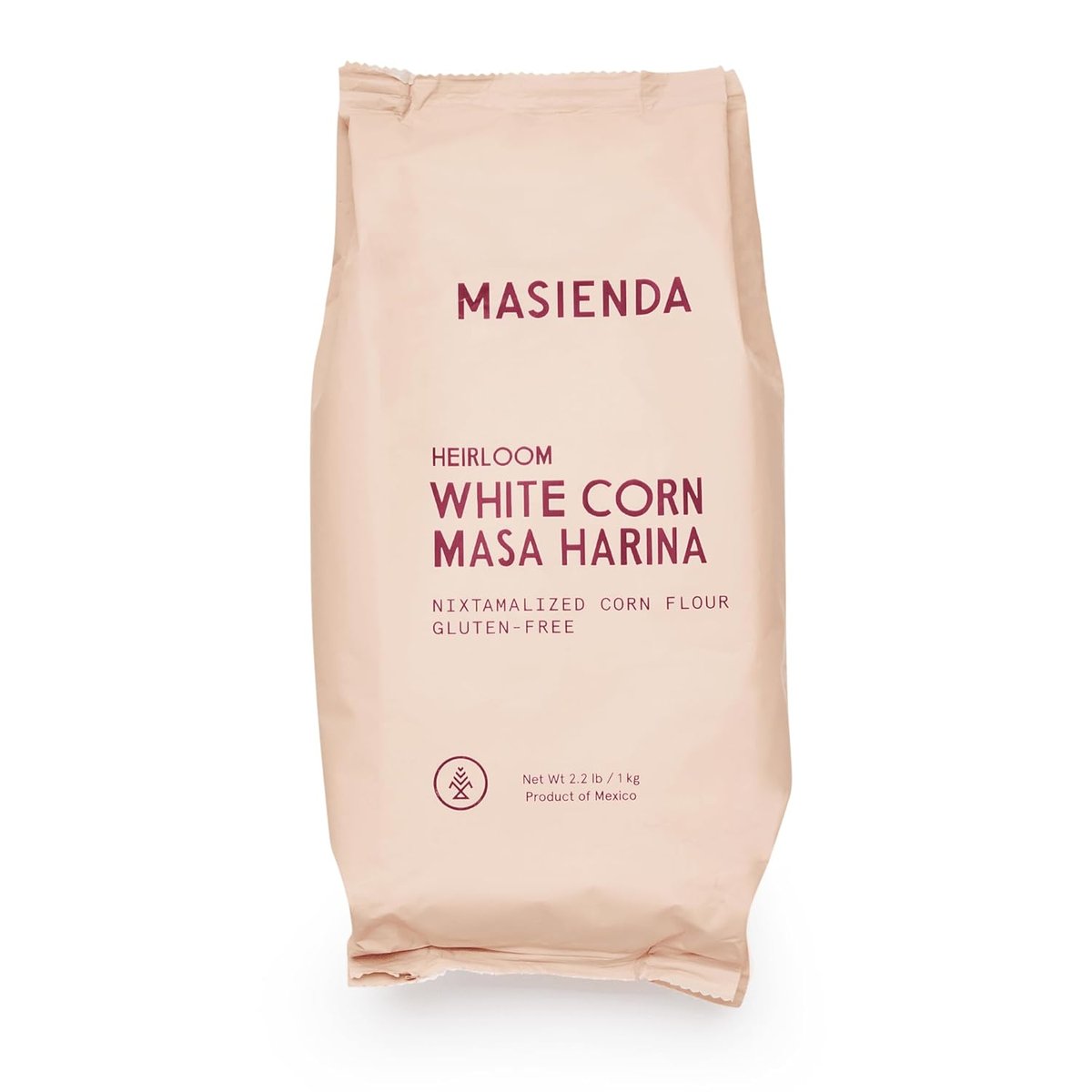
We chose Masienda Heirloom Corn Masa Harina because it is the only masa harina we found that solves the most fundamental problem in this category at the source — the corn itself.
Most masa harina research focuses on what was added to the product: preservatives, additives, bleaching agents. That is the wrong frame for corn. The deeper problem is what the corn already is before anyone adds anything. Over 90% of commercially grown corn in the United States is genetically modified. That contamination spreads through cross-pollination, enters commodity supply chains at harvest, and cannot be fully eliminated by a certification label once a crop has been grown in GMO-dominant territory. A "non-GMO" label on US-sourced corn reduces the risk. It does not eliminate it.
Masienda's corn is sourced from traditional heirloom landrace varieties grown by 2,000 smallholder subsistence farmers in remote regions of Mexico. These are ancient corn varieties that predate commercial hybridization by thousands of years and have never been genetically modified — not by certification requirement, but by biological heritage. The Non-GMO Project Verified seal independently confirms what is already true by nature. This corn is geographically and agriculturally isolated from the US GMO supply chain in a way that no domestically sourced corn, however carefully labeled, can match.
We are being fully transparent about what we do not know. Masienda's farmers are not certified organic, and Masienda themselves publicly acknowledge they cannot guarantee pesticide-free practices across their full network. No independent heavy metals or glyphosate testing has been published for this product. These are open questions — not evidence of a problem — but gaps that honest evaluation requires us to disclose. We say clearly what has and has not been verified, and we let you weigh that for yourself.
Who They Are
Masienda — Building a Better Supply Chain from the Ground Up
Masienda was founded with a single goal: rebuild the supply chain for traditional Mexican corn from scratch. The company works directly with a network of 2,000 smallholder subsistence farmers across remote regions of Mexico, sourcing heirloom landrace corn varieties — the same varieties that have been grown, saved, and passed down across generations in these communities for centuries. These are not commodity crops. They are living agricultural heritage, and most of them exist nowhere in the industrial corn system.
The corn is grown, nixtamalized, and milled entirely in Mexico. Masienda uses the whole kernel from start to finish, preserving the most flavorful and nutritious components of the grain rather than stripping them for efficiency. Their masa harina is then low-and-slow dried — a deliberate choice to preserve the nutrition and flavor that high-heat industrial processing destroys. The result is a product with a depth of corn flavor that is simply absent from industrial masa, and homemade tortillas that taste authentically better than anything sold in a store.
On transparency: Masienda publicly discloses on their website that the majority of their farmers are not certified organic and that they cannot guarantee pesticide-free practices across their full 2,000-farmer network. This level of honest self-disclosure is rare in the food industry. A less transparent company would simply claim "all-natural" and move on. Masienda does not. That matters to us, and it is part of why they earned consideration for the Gold Label.
Claims & Certifications
What Masienda Claims — And What Each One Means
Independent Research & Lab Testing
What Outside Investigators Found — And What Has Not Yet Been Tested
We want to be direct: no independent third-party heavy metals testing has been published for Masienda Heirloom Corn Masa Harina as of this writing. Lead Safe Mama, LLC — the primary independent consumer goods testing organization we rely on — has not published a lab report for this specific product. Mamavation has not published pesticide or PFAS testing for Masienda masa harina. No Certificate of Analysis is publicly available from the brand. We disclose this clearly because our readers deserve to know the difference between a product we love for its sourcing model and certifications, and a product that has been independently lab-tested and confirmed clean at the contaminant level. Masienda is the former. We believe it is the best available option in this category. But we have not seen the lab data.
What independent research does confirm is the category-wide contamination context. The Organic Consumers Association tested 13 masa flour and tortilla samples and found glyphosate concentrations as high as 30 ng per gram in some products, with an average of 5.0 ng/g. Their testing of Maseca — the dominant industrial masa brand — found glyphosate at concentrations between 5.14 and 17.59 ppb. Maseca's corn is sourced from the US and conventional Mexican commodity supply chains, where GMO contamination and glyphosate use are widespread. That context is directly relevant to why the origin and sourcing model of Masienda's corn matters, even in the absence of brand-specific testing.
We will update this page if and when independent testing for Masienda masa harina is published. If Lead Safe Mama or Mamavation publishes results — positive or negative — we will report them here with full transparency, exactly as we have done for every other Gold Label product on this site.
We review published lab results and independent investigator findings. We are not a laboratory and do not conduct our own testing. All primary sources are linked where available. The absence of testing for a specific product is noted explicitly — we never imply a product has passed a test it has not taken.
The Broader Picture
Why GMO Corn Is an Origin Problem, Not Just a Label Problem — And What Mexico Did About It
Over 90% of commercially grown corn in the United States is genetically modified. That number is not a fringe claim — it is USDA data, and it has held at roughly that level for over a decade. The implications for anyone trying to source clean corn are serious in ways that go beyond what a certification label can address.
Cross-pollination is the mechanism that makes GMO contamination in corn so difficult to control. Corn is wind-pollinated, and GMO pollen travels. When a conventional or organic corn field sits near a GMO field — as is virtually inevitable in the US corn belt — cross-pollination occurs at the field level, and there is no remediation. The grain is what it is at harvest. Certification programs like the Non-GMO Project test for this and reject contaminated batches, which is meaningful. But in a landscape where 90%+ of the surrounding crop is GMO, the baseline risk for domestic corn is structurally higher than for corn grown in geographically isolated regions where GMO varieties have never been planted at all.
Mexico understood this problem clearly. The Mexican government, citing the protection of 9,000 years of indigenous corn stewardship and the risk of GMO contamination to native varieties, moved to restrict genetically modified corn for human consumption and ban the domestic planting of GMO seeds. In early 2025, the Mexican legislature approved a constitutional amendment identifying native corn as "an element of national identity" and banning the planting of GMO corn seeds entirely. The US government, under trade pressure through USMCA, challenged and won a dispute ruling requiring Mexico to continue accepting US GMO corn imports for livestock and industrial use. Mexico complied with the ruling's terms — but still enshrined the constitutional ban on domestic GMO planting and the protection of native varieties into law. The fight over whether the world's most GMO-contaminated corn supply has the right to enter one of the world's most corn-culturally significant countries is ongoing, and Mexico has made its position on protecting its indigenous corn heritage unambiguous.
That geopolitical and cultural context is exactly why Masienda's sourcing model matters. Their corn is grown by traditional subsistence farmers in remote Mexican communities where heirloom landrace varieties have been cultivated for centuries and where GMO corn has never been planted. The constitutional protections Mexico has now enshrined in law are protecting the same corn heritage that Masienda has been working to preserve since the company was founded. This is not marketing language — it is the actual biological and geographic reality of where this corn comes from and what it is.
"Over 90% of US commercially grown corn is genetically modified. Cross-pollination means this contamination is systemic and irreversible at the field level. Masienda sources from heirloom landrace varieties in remote Mexican farming communities where GMO corn has never been planted — a meaningfully different baseline than anything grown in the US corn supply."
The final piece of this picture is what nixtamalization does that regular corn flour does not. Industrial corn flour — cornmeal, regular corn flour, untreated masa — skips or shortcuts the nixtamalization process. The result is a product that uses corn as a raw material but captures almost none of its nutritional potential. Niacin deficiency — pellagra — was historically devastating in populations that consumed large quantities of non-nixtamalized corn. Traditional corn-consuming cultures in Mexico avoided this entirely because nixtamalization was always part of the process. It is not a production step. It is the difference between corn as a base ingredient and corn as a nutritionally complete food. Masienda nixtamalizes traditionally, dries slowly, and uses the whole kernel. That is the product we chose.
One honest note on what remains open: Masienda's traditional subsistence farming model reduces pesticide risk compared to industrial agriculture, but it does not eliminate it. The brand themselves acknowledge they cannot guarantee pesticide-free practices across their full farmer network. Until independent pesticide and heavy metals testing is published for this specific product, that question remains open. We recommend it as the best available option in this category — and we hold that recommendation honestly, including its limits.
For Masienda's step-by-step guide to making homemade tortillas with their masa harina, visit their recipe page at masienda.com — How to Make Tortillas. The difference between a tortilla made from heirloom masa and anything sold in a grocery store is not subtle. We encourage you to try it.